Wednesday, October 24, 2012

REVIEW: Looking for Alaska by John Green

Looking for Alaska
by John Green

“When adults say, "Teenagers think they are invincible" with that sly, stupid smile on their faces, they don't know how right they are. We need never be hopeless, because we can never be irreparably broken. We think that we are invincible because we are. We cannot be born, and we cannot die. Like all energy, we can only change shapes and sizes and manifestations. They forget that when they get old. They get scared of losing and failing. But that part of us greater than the sum of our parts cannot begin and cannot end, and so it cannot fail.” 


Miles Halter lives a safe, dull life. He loves both his parents, no one comes to his birthday parties, and he is obsessed with last words (of dead people, not of books, or conversations). He decides to go and seek "the Great Perhaps," as poet François Rabelais said, and enrolls in a boarding high school in the woods. There, his life is shaken up by the family of misfit students who adopt him, especially by the funny, sexy, spontaneous and destructive Alaska.

Oh dear. I am so behind. I read this book over a month ago, and it is now fading from my memory. I am sure I have many other things to say about this book, but right now you will only get the things that made the strongest impression on me.

First, let me say that I am so incredibly late to the John Green bandwagon. I came across him as mearly a perveyor of wisdom and whimsy on the Vlogbrothers YouTube channel. Once I learned he was not only a YA author but an incredibly lauded YA author, I felt I must see what more this lovable genius man could do. Why did I choose Looking for Alaska? It was the only John Green book not checked out (probably because it was in the storage closet and no one knew it was there!)

Things I remember about this book:

1) It reminded me of what I imagine Perks of Being a Wallflower is like (though I have never read it.)

2) It is so good! The style is pretty much what you would expect from John Green. Funny, with a huge smack upside the head of truth. I kept picturing the main character as either a young John Green, or a young Hank Green (his brother who co-runs Vlogbrothers), depending on what the character was doing.

3) The characters are excellent. Not a stereotype in the lot. Alaska could just be a manic pixie dream girl, but he gives her real, dark reasons for why she is so unpredictable. She must seize every moment and never stop going going going or bad things will happen. Miles' roommate, the Colonel, is another gem. You think he will be a bit of a neanderthal, but his charm, his brain and his heart just pick you up and hug you. His and Miles' relationship become one of the high points of the book.

4) This book is not just high school hyjinx. The whole time, each chapter title counts down to something. "63 days before, "50 days before," "10 days before." You don't know what it is counting down to, or whether it is good or bad. Some moments you are hopeful, but other moments you are filled with foreboding each time you see those numbers. When it happens, even though at times you think you know what it will be, it still knocks you off your feet.

5) It is one of the best studies of grief since "The Body" episode of Buffy the Vampire Slayer. Possibly better than that.

6) It is peppered throughout with brilliant scenes from Miles' World Religions class, where they study not the dry facts of religion but where, as the teachers says, "We are engaged here in the most important pusuit in history. The search for meaning. What is the nature of being a person? What is the best way to go about being a person? How did we come to be, and what will become of us when we are no longer? In short: What are the rules this game, and how might we best play it?”

7) It was almost banned in a school because of sexual content, which lead John Green to post this video, called "I Am Not a Pornographer." I am a sucker for intellectual freedom.

I recommend it wholeheartedly, and I will definitely read more if his stuff! I will leave you with an inspiring, truth-dropping John Green vlogbrothers video:

Wednesday, October 10, 2012

REVIEW: Midnight in Austenland


Midnight in Austenland
by Shannon Hale
"'Have you been reading Gothic novels, Charlotte? You know what Mother would say. Women should not indulge in dark fantasies. It disrupts the proper workings of the womb.'
Charlotte snorted and coughed at once, she was so surprised. 'The proper workings of the womb?'
Eddie was trying very hard not to laugh. 'Indeed.'
'Never fear, protecting my womb from Gothic novels is my first priority.'
"I am very much relieved.'"

Charlotte Kinder has just gone through a messy divorce and needs to get away. She has no Jane Austen mania, like the Austenland heroine. She just needs a vacation from her life. So she decides to take it at Pembrook Park, the adult (no, not sexytime, just "for adults") roleplaying retreat manor house where actors and fellow guests leave modern society behind to live as Regency ladies and gentlemen. You can choose a new identity and be wooed by beautiful men and flounce around in lovely dresses. But when the games turn to ghost stories and murder mysteries, the line between reality and fiction blurs. Was that a real body in the attic, or just part of the fun?

This will be a short review, and please do not think it is short because I didn't like it. I loved this book! I devoured it in two days. I loved it more than Austenland. It seems much cleverer than the first book, for starters, both in narrative style and in plot.

For example, this little gem: "The pond lay dull and grey between the trees, no breeze to finger it's surface into uneasy ripples. The sky was clogged with clouds, preventing reflected sunlight from winking mischievously on the waves, as one might expect if the waters did indeed hide a secret. But the pond resisted all personification, neither begging for inspection nor warning of horrors best left alone. It just lay there, uninterested."

The prologue was a beautiful piece of writing. As this book is based on Northanger Abbey (as the first was based on Pride and Prejudice), Hale starts her book by explaining how her heroine is not a typical heroine. She was practical and nice, and never did anything unexpected or out of the ordinary. Even in this rather dull-sounding introduction, we manage to see ourselves in Charlotte. She is compelling in her normalcy.  The book jumps back and forth between the past events that created Charlotte, and the present as Charlotte tries to solve the mystery of the house and, in the process, solve the mystery of why she is so....nice.

I also enjoyed this more than Austenland because our heroine is not incredibly neurotic and obsessive. I felt that was a little off-putting about the first book. She went to be cured of something and finds love. Charlotte goes to escape, and finds herself.

It is less a girlish fantasy and more an actual journey of finding inner strength. And it is incredibly sexy and dangerous and gasp-worthy! There is just enough levity, and just enough darkness to thrill you.

Friday, September 7, 2012

REVIEW: Kraken by China Mieville


Kraken
by China Mieville

“And the continual non-up-turnance of so valuable a commodity as a giant squid—the thought of getting their alembics on which made the city’s alchemists whine like dogs—was provoking more and more interest from London’s repo-men and -women.” 


Billy Harrow works at the Darwin Centre, a museum and research facility in London that is focused on evolution. Their prized possession is a dead, preserved giant squid. When the giant squid suddenly disappears, Billy is thrust down the rabbit hole (so quickly I had to put the book down for a sec) into an insane London underbelly full of magic and cults, criminals and police. Along the way, he discovers that the theft of the squid somehow sets off the chain of events that will lead to the end of the world. He must learn the rules and break them all if he is to save London, and the world, from a fiery doom.

Did you understand that synopsis? I'm not sure I did.

This book is insane, and often you have to do mental backflips to grasp what is going on, who is fighting who, who did this horrible thing and why? But it is really good.

It's China Mieville, who gave us the equally complex Un Lun Dun. He loves himself some London underbelly. They also share themes: the importance of words, the un/destined hero, and prophecy informing present action. He also gives us a giant new helping of world building, species and rules. Some are similar, like the house that contains a forest in Un Lun Dun vs. the Embassy of the Sea (a house that contains the ocean) in Kraken.

Other things are completely new: reading the future of the city through cutting open the (literal) guts of the street, the Tattoo (a parasitic villain who lives on a man's back), Chaos Nazis (those who believe that the core value of Nazism is decadence and dress like deranged clowns), Goss and Subby (a nightmarish duo: a man who talks mostly nonsense and a silent boy who are responsible for most bloody catastrophes in history), angels of memory (the anthropomorphic protectors of museums and libraries), and most importantly, the cult that worships all things squid-related.

No, not Cthullu, though that is what I thought for the first few chapters. And the strange thing is, Mieville manages to take us from laughing about the ludicrousness of worshiping cephalopods as gods to being incredibly moved by the devotion of one particular devotee (I won't give away who).

There are so many joyful and clever inventions in this book, and often they don't feel like belong to the same world. You wonder if Mieville has all these crazy ideas in his head and then decides to take all of them and funnel them into one book. But somehow, he makes every single one of the crazy ideas relevant to the plot, even unnamed characters you gloss over for the first 3/4 of the book. As far out as it goes, he manages to tie it all back together. When the climax finally comes, you realize where everything was going and that it could only end this way.

And I love that Mieville is a NERD. He sprinkles so many references to nerd pop culture in there (some of them very obscure). One entire segment is devoted to a man who is so much of a Star Trek fan that he basis his magic on Star Trek's technology.

The characters are incredibly exciting too: Wati (a Egyptian spirit created to serve the dead in the afterlife who rebelled and is now a union organizer), Collingswood (a sassy and brassy doesn't-give-a-fuck cop chick with self-taught magic mojo), Smiley the Chameleon (a man whose power it is to make you think that you probably know him, doesn't he work in the office down the hall?).  It was a joy to watch Billy Harrow transform throughout the book, not through a one time test, like with Bilbo and the Spiders, but gradually, absorbing information and strategy as he goes. He begins as protectee,  walking behind his guide and protector, then beside, then offering plans as a co-combatant, then leading the group against the apocalypse.

While Mieville has this crazy, brainy, intricate and often perplexing style, he sprinkles in moments of whimsy, like "squididity" and "squid pro quo." Silly little puns to make your turning brain go "meh heh" and give it a break.

All in all an excellent book. Bit of a steak meal, though, so I'm going for something lite next.

Monday, August 13, 2012

REVIEW: Equal Rites by Terry Pratchett


Equal Rites 
by Terry Pratchett

“She was already learning that if you ignore the rules people will, half the time, quietly rewrite them so that they don't apply to you.” 


I'm sorry this is going to be a bit of a slapdash review of a book that is fading in my memory. Grad School has taken up all of my writing brain power.

So, Equal Rites. A wizard finds a blacksmith (who is a seventh son) whose wife is about to give birth to a seventh child. He bequeaths his powers to the child and dies before anyone informs him it is a girl. There has never been a female wizard before, and Granny Weatherwax, the no-nonsense village witch, is determined there never will be. Wizard and witch magic are too different. Wizard magic is all about flashy power and equations and making things happen. Witch magic is about rhythms and nature and asking for things to happen. Women shouldn't be wizards, just as men should not be witches. So Granny Weatherwax trains Esk (the girl) as a witch. Helped by the dead wizard's forcefully opinionated and loyal staff (the stick, not the group of people) Esk and Granny soon realize that wizardry might be Esk's only option if she wishes to not wreak havoc.

This book had all of Pratchett's wit and charm with very little of his meandering. He pretty much kept with Esk and Granny's story, and their journey to Ank Morpork to the Unseen University, and their ensuing battles. I quite enjoyed its simplicity!

It actually seemed like a little story-let. You have the origin story, the journey to the magic school, and right when you think the training montage is going to begin, Pratchett drops the final battle on you.

I think I liked Granny Weatherwax's transformation more than Esk's. Granny starts out very set in her ways, thinking cities were dens of iniquity, and always wearing black simple clothes. After a while, she begins to loosen up, and then ends up having the most fantastic battle of them all! Very Sword in the Stone. And her ensuing relationship with her opponent is one of the delights of the book.

Esk, and her compatriot Simon, have a weird, metaphysical, philosophical final battle that I still don't completely understand. About how not using magic is the real magic. No idea.

Any Granny Weatherwax fans should definitely read it, though! This is her first appearance in the Discworld series.

Thursday, June 28, 2012

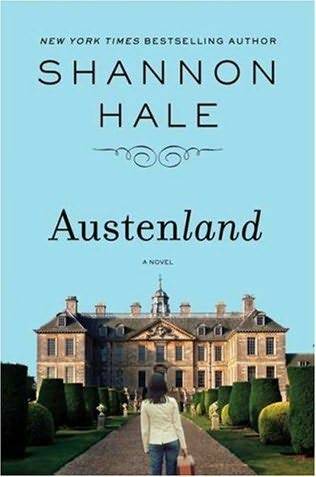
REVIEW: Austenland by Shannon Hale


Austenland
by Shannon Hale

“Well do I remember the first night we met, how you questioned my opinion that first impressions are perfect. You were right to do so, of course, but even then I suspected what I've come to believe most passionately these past weeks: from that first moment, I knew you were a dangerous woman, and I was in great peril of falling in love."

She thought she should say something witty here. She said, "Really?” 


It is a truth universally acknowledged that every girl must occasionally read fun frivolous girly books. Equally true, every great author needs to write them.


Shannon Hale, author of The Goose Girl, a fantastic book, has written a delicious, indulgent, smart, and surprisingly genuine girly book. Jane Hayes, graphics designer, is obsessed with Colin Firth as Mr. Darcy (in a ashamed, hide-the-dvd-in-her-plants kind of way). To cure her of this, her great aunt Caroline bequeaths Jane a trip to Pembrook Park, a Jane Austen resort where women go to live in the world of Austen, surrounded by actors (specifically gentleman actors) to play the parts of Austen-like heroes: the brooder, the jovial rake, the common-man-turned-successful-sea-captain). Jane struggles with the dichotomy (real or not real?), and feels like a desperate, sad, ridiculous women, but then, things begin to turn around. Is she deluding herself, as always, or is she being offered something real in Austenland.

DAMN, this book was surprisingly good. I swear, I came home today and read the entire thing in one sitting (minus a chapter or two yesterday). It was so refreshing after reading books where I care about style and serious things. It was like exfoliating! Scrubbing off the slough of academia and large fantasy tomes to revel in a little bubble bath.

And yet, this book surprised me with it's depth. Yes, the plot is predictable, so is the plot of almost any romantic comedy. I began with the book at arms length, judging Jane for fangirling, and the being weirdly ashamed about it. But as the story continued I was sucked in, and became totally invested in her story, squeeing and crying out in emotional agony at the appropriate moments.

This is a must have for anyone who a) has the Austen fever and b) has ever fantasized about being swept off your feet by the guy of your dreams in a romantic setting. I'm looking at all of you, ladies.

PS: It is also a Movie.

Tuesday, June 19, 2012

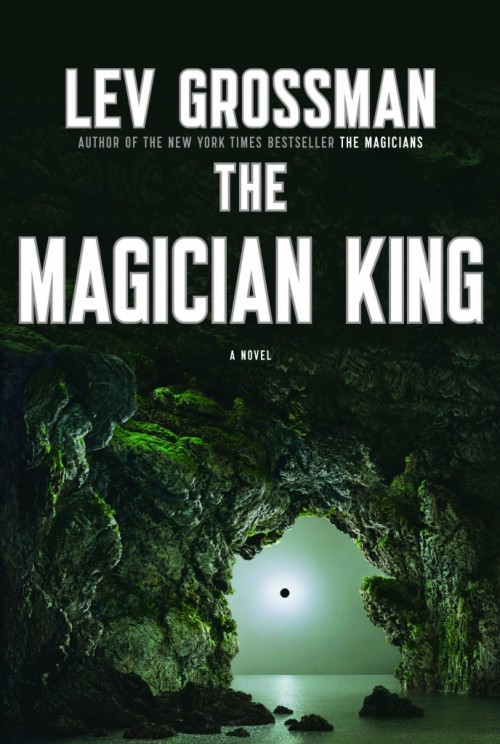
REVIEW: The Magician King by Lev Grossman


The Magician King
by 
Lev Grossman

“Quentin had an obsolete sailing ship that had been raised from the dead. He had psychotically effective swordsman and an enigmatic witch-queen. It wasn't the Fellowship of the Ring, but then again he wasn't trying to save the world from Sauron, he was trying to perform a tax audit on a bunch of hick islanders…” 


The Magician King pretty much picks up where The Magicians left off. Quentin and his friends are kings and queens of Narnia-- I mean Fillory. Everything is pretty much perfect, and there is not much for them to do. Quentin longs for adventure, but the best he can come up with is an unnecessary trip to collect back taxes from an island territory. From there, the book is basically The Voyage of the Dawn Treader, with some side excursions and the mysterious Julia (self taught witch friend of Quentin)'s back story woven in.

Well, Lev Grossman does his brilliant and frustrating thing again. He lets the story meander leisurely. There are some frustrations along the way, but nothing too big. People live their lives. You come to love them, and the world they inhabit. You know something horrible is going to happen because that is what Grossman does. However, in this book it takes so long for something horrible to happen that you think, maybe this time it won't! You come to love the natural rhythms of the story, and accept the Narnian logic of things. And then within the last 100 pages, he takes everything you love, locks it in a house, and burns it to the ground. Metaphorically speaking. And damn it, it is satisfying.

It differs from The Magicians in a few ways, though. First, Quentin is no longer a dick. He has grown up into a decent person, still a little haunted by the events of the last book. Second, Julia (a minor character in the first book) comes into her own in this incredible journey of power, addiction, and transcendence as she teaches herself the magic denied to her when she failed the Brakebills exam in the last book. Third, Grossman seems to trust in Fillory just a bit more. It really comes into its own as Narnia, the land you love and long for, rather than a cardboard cut parody of Narnia. The scenes where Quentin is sailing on the ship are saturated with peace mixed with salty adventure, exactly what you wish for in a Fillory adventure.

It really takes a long time for Grossman to pull the rug out from under you, but when it happens he nails you not once, not twice, but three times in quick succession. Just when you think everything is safe (though you have a small voice telling you it might have been too easy) he will get you, but never in a way that you expect.  The ending is desolating and painful, but strangely right. Almost like Eustace scratching away at his dragon skin to become a new man in Dawn Treader. 

Another brilliant book from Grossman. I can't wait for the third!

Wednesday, May 30, 2012

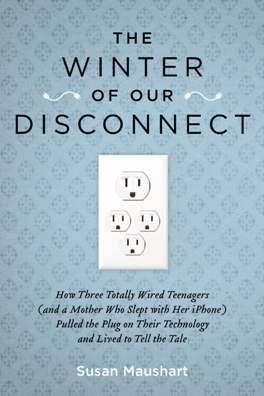
REVIEW: The Winter of Our Disconnect by Susan Maushart


The Winter of Our Disconnect:
How Three Totally Wired Teenagers (and a Mother Who Slept with her iPhone) 
Pulled the Plug on their Technology and Lived to Tell the Tale 
by Susan Maushart

"'If you ever want to know what was going through Frodo Baggins' mind as he stood clutching the evil ring over the lava pits of Mt. Doom in The Return of the King,' wrote Norman, 'buy an iPhone.'"

Susan Maushart sleeps with her iPhone. Her kids are always listening to their iPods, playing computer games, or surfing the web. Finally, Susan has had enough and she decides to do an experiment: the family will unplug for 6 months. This means no TV, no computers, no iPods, no cell phones. They go from constantly being connected to actually making a connection.

This was one of those books I put on my list never really intending to read. Non-fiction isn't really my thing. However, immersive journalism is. I was struggling with my own media addiction and needed a palate cleanser after so many YA and juvenile fantasy books, so I picked it up.

While this book is rather frustratingly structured (she tries to go chronologically, but then also by theme, so you end up with a lot of repeated information and you get lost in the timeline), the content really struck a chord with me.

There are two large worries that prevent the modern person from attempting an experiment like this: the fear that we will be bored, and the fear of loosing connection. The family struggles with both of these. The children whine and go to friends houses to use their technology, at first (the experiment is limited mostly to the house). However, then a transformation occurs. The family starts talking to each other. The kids spend time in each other's rooms looking at magazines and listening to CDs. They help their Mom cook dinner, and actually spend time at the table, rather than gobbling and racing off to play more video games. Friends came over for board game nights and sing-alongs around the piano. They looked at actual photo albums and told stories.

The most incredible change really resonated with me: the son used to love the saxophone, but then when he got a monster gaming station, he let it fall by the wayside, and said he would pick it up again "when he had more time." I say the same thing about my violin. However, when technology was forbidden him, he picked up the sax again, practiced for hours every day, had jam sessions with his friends, and started a band. He discovered he wanted to be a musician as a career. Think of what we could do if we didn't have computers. Susan makes an excellent point that often boredom is the mother of invention. It pushes you to fulfill unmet needs, to be determined, prepared, patient and experimental.

Another element to the boredom debate that Susan touches on is the myth that parents need to entertain their children 24/7. That they feel like a deficient parent if their kids are bored. Not only that, they feel deficient if they are not on call to help their kids out with every little problem. Susan learns through this experiment, and through her research, that boredom is actually a good thing. Kids learn best when they are able to figure things out for themselves. It gives them ownership over the knowledge. However, if a parent is constantly trying to IV entertainment into their kid's bloodstream, or doesn't let their kids get lost and have to find their own way back (even at age 23), they will never be self-sufficient. It is no wonder that 30 is the new 20. People remain children a lot longer because they don't know how to take care of themselves.

Fear of loss of connection was a huge issue for them (and would be for us). 1) Cell phones. What if an emergency happens? What if I am late to pick up someone, how do I tell them? It turns out, if there is an emergency, they will find you some how. The son was in a car accident, got a ride home, and called his mom afterwards. He handled the situation himself. And it turns out that if you set up a time to pick someone up, and neither of you have a cell phone, they will be there on time. Planning ahead. Who knew?

2) Missing news: newspapers. A huge theme of this book was, if you need to know, you will find out. You don't need to drown in minutiae. If something important happens, you will be told. Relax.

3) Loosing connection. It turns out, people feel more connected when they don't have the internet. The surfacey texting, IMing, Facebook messaging and e-mailing does a lot less for you than sitting down with someone face to face and having a conversation. This connected feeling we crave is really the need for human contact. Which is ironic, because the internet makes us feel like we are getting that, when we are really not.

The book also touches on the now well-known research about the Millennials (and us now) and how they (we) are lateral readers (surface over depth), and think the easiest research is the best research. No concept for reliable sources, multitasking actually doesn't exist and is detrimental to focus and performance, high computer/tv use leads to depression and atrophied social skills (possibly autism), those kids who had family meal times at the dinner table had more well adjusted kids than those who didn't, etc. She actually mentions a lot of books I had already read about the subject.

One thing that surprised me, though is that what we think of as normal teenage behavior (unresponsiveness, weird sleep patterns, surliness, sitting on the couch, eating junk food, and watching tv for hours, AND not expressing natural adult behavior until -gasp- 28) is actually not natural. People say it is natural because it is an epidemic, and every teenager does it now, but that was not always the case. It is a combination of inactivity, over-parenting, lack of sleep due to technology, and the perpetuated myth of the "this is how I am supposed to act" surly teen.

Within all the studies and research, Susan gives the reader concrete examples about how her family has reflected the studies.

Another nice thing about this book is that she does not take sides. It may seem that she is heavily anti-technology, but the relief she feels when she gets back her technology says otherwise. She has learned from the experiment to live in moderation.

I really recommend this book for anyone who had that nagging feeling that they should be doing something else other than Facebook.

More Books Like This:
The Happiness Project by Gretchen Rubin
Eat, Pray Love by Elizabeth Gilbert
A Year of Living Biblically by A.J. Jacobs
The Guinea Pig Diaries: My Life as an Experiment by A.J. Jacobs