Wednesday, October 12, 2011

ARCHIVED REVIEW: Kate Remembered (12/2/10)


Kate Remembered
by A. Scott Berg


So I finished this book a while ago and have moved on to reading Harry Potter again before summer.

But this book was wonderful and engaging. It is the memoirs of a professional biographer and his long friendship with Katherine Hepburn. He felt he couldn't do a real biography because he loved her so much, he couldn't be objective.

It is incredibly beautiful and incredibly sad as we listen to Katherine reminisce to Scott about her life, her patient, quiet, and giving love of Spencer Tracy, her ups and downs, and how Scott himself remembers the slow tragedy of her death.

She was a hell of a woman. She went swimming every morning in the lake, no matter what the temperature, even into her later years. She always insisted everyone make their beds in the morning (she scolded Michael Jackson when he told her he didn't know how), and she spoke her mind at every turn. She was blunt and harsh and told the truth as she saw it, and people loved her for it. She made many flops, and she acknowledged them openly, but she also gave some of the most brilliant performances the world has ever seen (my two favorite are Lion in Winter and Guess Who's Coming to Dinner).

This book is not a biography, so it may frustrate some people when Scott Berg starts talking about the other books he was writing at the time and not about Kate, but it is worth it to hear her story from her own mouth, and from one who loved her.

ARCHIVED REVIEW: The Napoleon of Notting Hill (11/11/10)


The Napoleon of Notting Hill
by G.K. Chesterton

It is 1980 (the future) but everything is pretty much the same as at the turn of the century. Everything has become more gray, more normal, and the king is chosen through alphabetical order, since it is just as good as through birth.

In this humorless world lives Auberon Quin, a satirist, who thinks everything is funny. When he is chosen to be king, he decides to turn the world on its head. He draws up a proclamation, separating London into her different burroughs, making them walled cities, and commanding the Provosts of those cities to wear garish medieval garb, speak in high romantic language, and be followed around everywhere by trumpeters and halbriders.

Then, he meets the one Provost who takes it seriously. Adam Wayne sees romance in everything, everything is significant and glorious. Adam believes this so passionately that he starts a war over a road that will go through his neighborhood.

I loved this book so much! The entire book is an extended parable, examining those who don't take life seriously, and those who take even a lamppost deadly seriously. I was intrigued because I never knew which side G.K. Chesterton was on. He let each side speak their piece.

My favorite moment in the book involves Adam Wayne recruiting for his army and he goes into a succession of shops. The first is a grocer, and instead of seeing a plain grocer, he sees a purveyor of exotic goods from all over the world, and recommends he organize his shop by country, decking each display with silks and incense and artifacts from the country. He sees the chemist (pharmacist) as a dark, benevolent sorcerer, with a shop full of strange vials and colorful liquids.

He sees the ordinary as extraordinary, and by the end of the book, he has changed the world.

If you liked this book, you may also like:

ARCHIVED REVIEW: The Man Who Was Thursday (10/29/10)


The Man Who Was Thursday
by G.K. Chesterton

After a heated, but supposedly theoretical, debate about anarchism at an evening garden party, poet Gregory Syme finds himself leaping headlong into an dangerous mission to infiltrate the powerful anarchist cell in the city. But nothing is as it seems.

I loved this book! Every time I thought I knew what was going on, GK threw a curve ball at me. And even when I discovered what was going on before it happened, it was still a delight to watch it unfold. It gets a bit allegorical, but it is so beautiful and satisfying that I didn't really care.

And GK's writing is incredibly Neil Gaimany, especially in his character descriptions of the anarchist council. Its like a Sandman pantheon. I can see how Neil was influenced by GK.

If you liked this book, you may also like:

ARCHIVED REIVIEW: Essential Writings of G.K. Chesterton (10/21/10)

Essential Writings of G.K. Chesterton
Edited by William Griffin

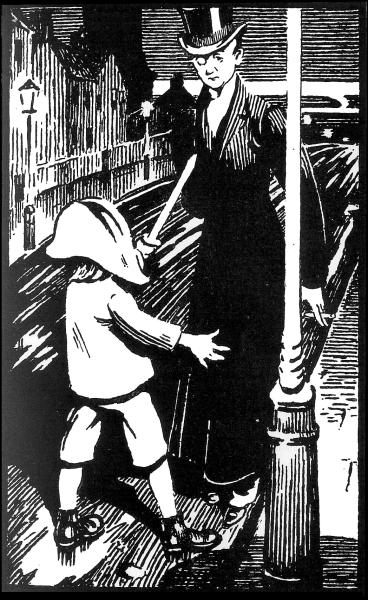
(the cover of the book is boring, so here is a fun caricature of GK).

This book is a collection of G.K. Chesterton's non-fictional writing on philosophy, social commentary and religion.

With this book, I have fallen in love with GK Chesterton: the man, if not the writer. He was an enormous man, with a fat walrus mustache. He dressed so shabbily that his wife dressed him in an opera cape, strange hat and a sword cane so that people wouldn't notice his shabby clothes because of the eccentricity of his dress. He ate a lot, drank a lot, and was merry a lot. He was jovial and generous, very spiritual, and yet not afraid to live in this world to the fullest. He valued Humor and Humility above all things, loved a good joke, and reveled in paradox.

All of this is revealed throughout his writing. In one essay, he expounds upon the luckiness of a man who thinks he has discovered a new land, but realizes upon arrival that he has sailed back to England. He gets both things that man needs most: the uncertainty and excitement of adventure and wonder, and the cozy stability of home. In another, he talks about how you should love the world for all its gladness, and if it is sad, you should then love it more. In another, he expounds upon how a child sees a tree and a lamp post with equal wonder, and how we should retain that wonder at every day life as we grow up. He talks about how the spiritual man is the only sane man, because he can see the smaller and the larger picture by the light of his belief, that virtue is not the absence of vice, but a "vivid and separate thing, like pain or a particular smell." He wrote a series of essays entitled, "Why I am Not a Pagan," "Why I am a Christian," "Why I am a Catholic," "Why I am an Elf," and "Why I am a Clown." He talks about the silence of the universe being not emptiness, but mercy, because if we could hear the laughter of the heavens and experience the "frantic energy of divine things" we would be knocked down "like a drunken farce."

You see why I love him.

His writing does get convoluted at times, and his logic often does not follow. He runs very much on emotion and humor to get his point across, and you can very easily poke holes in some of his arguments. (There is a debate between GK and GBS at the end of the book, and this is extremely apparent when juxtaposing their styles of argument). However, I don't think he cares. He feels something, and wants to tell you why he feels that way. More often than not it is just because it is beautiful or awe inspiring, not because it is logical.

If you liked this book, you may also like:
The Napoleon of Notting Hill by G. K. Chesterton
The Man Who Was Thursday

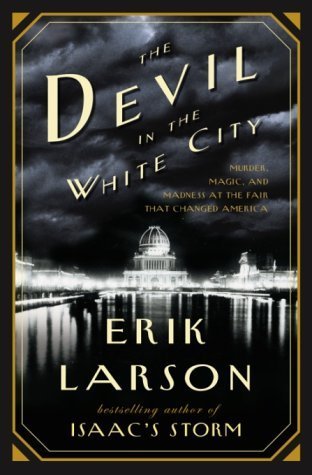
ARCHIVED REVIEW: The Devil in the White City (10/6/10)


The Devil and the White City
by Erik Larson

The book is non-fiction and tells of the vision, brilliance and underdog tenacity that it took to bring about the Chicago World's Fair, and the serial killer who haunted its streets.

I did not think I would like this book but I loved it! It did exactly what I think history books should do: plunk you down in the middle of the noisy smoky street in Chicago in the late 1890s, next to David Burnham (the main architect for the World's Fair) as he asks you the time. In other words, history books should be a TARDIS. 

It gives you all the sights, smells, and textures of the world and the sighs, tears, chuckles and fury of its players. The reader becomes as familiar with them as with their hometown and its denizens. Sometimes this goes a little far, often putting the reader alone in a room with the serial killer as he revels in his kill, which teeters on the realm of historical fiction, but the author acknowledges those moments in the back of the book, and cites the sources by which he reconstructed the scene.

The book is an tantalizing juxtaposition of the hope and struggle of Burnham and the Chicago people to create the forefather of Disneyland, and the cold and seductive machinations of H.H. Holmes, the man who used the fair as bait.

I recommend it even if you don't like non-fiction. It is, in fact, a non-fiction gateway drug.

If you liked this, you may like:
Fingersmith by Sarah Waters
Steampunk Fiction

ARCHIVED REVIEW: The Library at Night


The Library at Night
by Alberto Manguel

Ok so I have been done with this book for a while, so I can't really remember a lot of it. I'm grasping at fleeting impressions, and using a few notes I took.

This book examines libraries through the lens of different concepts: Library as Myth, Library as Space, Library as Power, Library as Identity, etc.

I was not prepared to like this book, as the author spent most of the first chapter expounding on how awesome libraries are, his in particular. But then he got into the historical bits and I loved it!

For example, there were public libraries dating back to ancient Rome. People would read aloud to themselves, before the idea of silent reading caught on, the Warburg library was cataloged more by the movement of the world soul than by logic. And that ancient libraries were very like our own:

“May Ishtar bless the reader who will not alter this tablet nor place it elsewhere in the library and may she denounce in anger he who dares withdraw it from the building.” – Mesopotamian tablet 7th cent B.C.

I also found it rather uncanny that when I was having difficulty cataloging the Luce, the book would talk about the difficulties of cataloging, and when I was running out of space, it would talk about the problems of fitting your books where they need to be.

And it had great quotes and ideas:

“If an image of the cosmos can be assembled and preserved under a single roof (as King Ptolemy must have thought) then every detail of that image – a grain of sand, a drop of water, the king himself – will have a place there, recorded in words by a poet, a storyteller, a historian, forever, or at least as long as there are readers who may one day open the appointed page. There is a line of poetry, a sentence in a fable, a word in an essay, why which my existence is justified; find that line and my immortality is assured.”

“According to an early hadith, or Islamic tradition, “one scholar is more powerful against the Devil than a thousand worshipers.”

“A library’s value was determined only by its contents and the use readers made of that contents, not by the rarity of its treasures.”

“There is an unbridgeable chasm between the book that tradition has declared a classic and the book (the same book) that we have made ourselves through instinct, emotion and understanding: suffered through it, rejoiced in it, translated it into our experience and (notwithstanding the layers of readings with which a new book comes into our hands) essentially become its first discoverers, an experience as astonishing as finding Friday’s footprints in the sand.”

ARCHIVED REVIEW: The Dream of Perpetual Motion (8/9/10)


The Dream of Perpetual Motion
by Dexter Palmer

This was a very well-written book. It was very hard for me to get into at first because I had just gotten off the brutal, visceral and surgically precise style of Joe Abercrombie, so I had little patience for Palmer's dreamlike writing.

In this book, you often do not know who the narrator is. You think it's the main character, who says at the beginning that he is writing his journal, but then it switches to third person. It often goes back and forth in time, and uses the writings of other characters to augment the main character's point of view. Its one of those books where you know how it will end, and you read to figure out how it gets that way.

The story takes place at the turn of a century, at the beginning of an industrial revolution. It seems like a steampunk book, but you are never really sure what world you are in. All you know is that it is a world changing from an age of miracles to an age of machines, a metaphor for the transformation from childhood to adulthood, from wonder to apathy, that carries throughout the book.

The main character is Harold Winslow, whose made a choice early in life to have his destiny irrevocably tied to the famous and elusive inventor Prospero, and his secluded adopted daughter Miranda. At first, you think it is a retelling of the Tempest, but it turns out that Prospero chose his name and that of his daughter to mirror the characters in the play. He has tried to shape his life to emulate them.

At times the book is a bit disturbing, b/c the main character is very detached from life. Horrific things start happening, and they are made all the more horrific because we see them through the lens of someone who has no emotional response to them.

Recommended for those who like steampunk, Shakespeare, and books like The Book Thief (though I don't believe it is as good).

If you liked this book, you may like: