Showing posts with label archive. Show all posts

Thursday, October 13, 2011

ARCHIVED REVIEW: The Making of the African Queen or How I Went to Africa with Bogart, Bacall, and Huston, and almost lost my mind (9/17/11)


The Making of the African Queen 
or How I Went to Africa with Bogart, Bacall, and Huston, and almost lost my mind
By Katherine Hepburn

"I remember observing one thing that struck me very powerfully. I would look serious or worried or trying to be sympathetic-- or solemn. And I would recieve back an absolutely impenetrable expression. A wall. But if I smiled or laughed, he did too. The universal language. This amazed me. I would have thought that tears were the things which bound us together, but no-- smiles, laughter-- and they warmed up immediately. Understand my ridiculous self-- thank you-- yes. We are rediculous, aren't we-- black-- white-- yellow? If we couldn't have some laughter we would crumble. Color be damned, We must laugh together."

This is Katherine Hepburn's first book, and she doesn't give a fuck. She writes how she wants to write and does not care about any rules or style but her own. She writes how you expect her to speak, very stoccato, with trails of sentence fragments, often separated by dashes. She will describe a room by listing nouns: "Heat-- hotel-- French-speaking Belgians-- no panes of glass in windows-- porches-- high ceilings-- blinds-- mosquito nets over the beds-- painted cement floors-- dark, spare bathroom-- watch the bugs-- watch the water-- thoughtful people-- took care of us afternoon and evening." For the most part, a coherent picture emerges, but sometimes you loose your place, or can't make the leap from one of her thoughts to another. But she is unapologetic: this is Africa as she experienced it.

It is Hepburn at her most Hepburnish: brash, bold, strangely and specifically neurotic (she can't go to the bathroom when others are nearby), and often quietly vulnerable. I was rather shocked at her selfishness (kicking the studio accountant out of his room because his room was better than hers), but she openly acknowledges that it was a mean move on her part, in retrospect.

She paints a loving portrait of Bogart, Lauren Bacall and John Huston, and their adventures filming the African Queen, faced with shipwreck, disease, and poor conditions.

Her views of the native Africans are jarring, though typical for the times. She is fascinated by their quaint ways, and can't really tell one from the other until she becomes friendly with her "boy" (the native assigned to wait on her). Even then, she holds him at a distance, not quite on the level of the white settlers, but special to her.

It is a fun, behind the scenes memoir, written by one of the most adventurous and authentic women of all time. It is not a great work of art, but it is honest, heartfelt, and unapologetic.

If you liked this book, you may like 

ARCHIVED REVIEW: Terrier (9/1/11)


Terrier
by Tamora Pierce

"The Lower City is MINE, Its People are MINE. 
If I Find Them That's Doing All This Kidnapping 
And Murdering, They'd Best Pray For Mercy, 
Because Once I Get My Teeth In 'Em 
I Will NEVER Let Them Go. "

Beka Cooper (ancestor of George Cooper of the Song of the Lioness quartet) is a new Puppy (cadet) in the Dogs (police force) of Tortall. This book chronicles her first year in the Dogs as she learns to overcome her shyness and track down some of the most dangerous criminals in Tortall, right in her own backyard. She is against incredible odds, but she has the advantage of being able to hear the voices of the dead.

I was worried this book would be just like every other Tamora Pierce novel. Don't misunderstand, her Song of the Lioness quartet was a formative book for me, but I started to feel after reading Protector of the Small that her stories were a bit formulaic. Pierce breaks out of her usual setting of knights and nobles to tramp through the dark and dirty allies of the Lower City, the poor section of the capital. Instead of battles and court intrigue, Beka deals with drunkards, murderers, and thieves in the section of the city where she was born. It has a very local feeling to it. While the other books dealt with the fates of kingdoms, this book's danger has immediate and intimate consequences.

While Pierce seems to try to give Beka a separate character from all the heroines before her (i.e. she is shy), she is still the same old girl in a new face: desperate to prove herself, fiercely determined and stubborn, incredibly serious, and feels she is undeserving of any rewards or praise. For once I wish that we had a carefree, funny heroine. (Perhaps the Trickster heroine is this, and I am forgetting?)

Pierce certainly writes many ancillary characters who are filled to the brim with wit, ease and skill. The group of friends that gravitate towards Beka are diverse and sparkling. The descriptions of their cozy breakfasts together made me wish I could walk in on the picnic. Beka's constant companion is a no-nonsense black cat with purple eyes. Who may or may not be a god. Or a constellation. Or Faithful's ancestor or previous life (Faithful was the black, purple eyed cat from Song of the Lioness).

I did enjoy the story, and it was fun to play in the Court of the Rogue, knowing that my favorite character, George Cooper, would rule it one day. The mysteries (there were two main ones which got to be a bit much some times) were entertaining, but I figured out who the culprit was about 1/3 of the way through the book. Maybe it was because I started to do what I do when watching an episode of Castle: looking at familiar writing patterns for clues as to where the author will take the story next.

However, Tamora Pierce was a huge part of my childhood and I am glad that she is still writing solid heroines for new generations!

ARCHIVED REVIEW: Howl's Moving Castle (8/19/11)


Howl's Moving Castle
by Diana Wynne Jones

"By now it was clear that Howl was in a mood to produce green slime any second. Sophie hurriedly put her sewing away. "I'll make some hot buttered toast," she said. 
"Is that all you can do in the face of tragedy??" Howl asked. "Make toast!"

Sophie is the eldest of three sisters, and everyone knows it is the youngest that gets the adventure and the prince. Just when Sophie resigns herself to a life of mousy mediocrity, a run-in with the Witch of the Waste turns her into an old woman. Freed from the conventions of youth, Sophie sets off on her own, and bullies her way into the moving castle of the wizard Howl, in hopes of a cure.

This book was delightful, funny, and heartwarming. I confess I did have a difficult time separating it from the movie. I saw Sophie and Calcifer as the movie portrayed them, which was fine, but I wish I had been able to see my Howl with fresh eyes.

I enjoyed Sophie's transformation from timid youth to temperamental old woman. She was freed by the realization that as an old woman, she could do and say what she liked, and this attitude launched her into her adventure. She could have lead quite an unremarkable life if she had remained as she was.

I loved how Diana Wynne Jones portrayed the small, weird family that gathers in the moving castle. At first, Howl is quite alone with Calcifer (the snarky fire demon who moves the castle, and cooks the bacon) and ignores Michael (his student). With Sophie's appearance, they create an odd domestic circle, settling into rhythms and coming to rely on each other as more and more strange beings enter their family: a man-dog, a turnip-headed scarecrow, etc

In Howl, she creates a fantastically charismatic, and deeply flawed man: a vain, powerful, cowardly baby who can be kind and vulnerable one minute, and flooding the house with sulky green slime the next. He works subtly on the reader, as he does on Sophie, and soon, even though he is a bastard, you feel deeply for him. Still, Sophie does not take any of his shit, and it makes my heart hum to hear him being ridiculous and have her take him down a peg or two.

She spins Sophie's relationship with Calcifer and Howl so subtly and so well, that the ending comes as a satisfying surprise. You were not expecting it, but when you looked back, you knew that all was as it should be.

ARCHIVED REVIEW: The Happiness Project (8/17/11)


The Happiness Project
by Gretchen Rubin

"A 'happiness project is an approach to changing your life. First is the preparation stage, when you identify what brings you joy, satisfaction and engagement, and also what brings you guilt, anger, boredom, and remorse. Second is the making of resolutions, when you identify the concrete actions that will boost your happiness. Then comes the interesting part: keeping your resolutions."

This book is in the amusing and enlightening tradition of other immersion journalism writing: Thoreau's Waldon, A.J. Jacob's Year of Living Biblically , Elizabeth Gilbert's Eat, Pray, Love. Each of those books is about someone changing their entire life, uprooting themselves, and drastically altering their lifestyle. While that is all well and good for those of us who have money, time, and bravery, The Happiness Project is for those of us who don't. It outlines a way for us to change our lives in small ways.

Strangely enough, it works! While I read the book, I started to apply a few of the tips she comes up with to my own life, and guess what? I was happy. I finished the book, and immediately bought it and started highlighting.

Her project is fascinating! Gretchen Rubin is happy. She has a wonderful family, career, husband, but, like many of us, she grumbles through her day, wastes time, and doesn't appreciate her life. She is afraid she is letting it slip by without living it to the fullest.

She devises a system. Each month she will focus on a theme, and within that theme she will choose 4 or 5 habits to cultivate. She prioritizes: first, energy (b/c she won't be able to do anything else if she doesn't have that), then love for her husband, career, children, etc.

For example: June's theme was friendship. She vowed to remember birthdays, be generous, show up, don't gossip, and make three new friends. The habits often seem vague until you see how she implemented them. Once she starts a new month, she adds on a new topic, and new habits, and by the end of the year, she is cultivating all of them. The bulk of the book tells of how she succeeds or fails at each of these tasks.

She also comes up with overarching principals to guide her when she is struggling with a choice, like "Be Gretchen" to keep her true to herself, and "Act the way you want to feel." These principles when introduced at the beginning seem pedantic and meaningless, but as they are applied, you begin to understand their weight and value.

Don't get me wrong, there are parts of the book that I skimmed. I did not feel connected to the passages where she re-prints the comments other people posted to her blog. Sometimes the general philosophizing about happiness felt a bit old hat. Towards the end, I got a bit fatigued with new tips and practices to focus on (only natural, as I was reading her year of effort in a week).

She emphasizes that her Happiness Project is not our Happiness Project. We need to prioritize what is important to us and create our own system. And this reader is very excited to get started.

If you liked this book, you may like:

ARCHIVED REVIEW: Persepolis and Persepolis 2 (8/7/11)


Persepolis and Persepolis 2
by Marjane Satrapi

"In life you'll meet a lot of jerks. If they hurt you, tell yourself that it's because they're stupid. That will help keep you from reacting to their cruelty. Because there is nothing worse than bitterness and vengeance... Always keep your dignity and be true to yourself."

Persepolis is a simply, but elegantly illustrated biographical graphic novel of a young girl growing up in Iran during the revolution, the Iraq war, and the extremist regimes that controlled the country. Marjane Satrapi tells her story with humor and honesty, often in the face of terrible circumstances. She describes a beautiful personal journey to find her identity, a difficult task when at home her government oppresses her individuality, and abroad she struggles to remember her roots where she is seen as the "other." In the end, she is still seeking answers, but her trials and the love of her family have given her strength.

I hate to begin a review like this, but I liked it better than the movie. The movie tried to smush two journeys into one and left out a lot of the more interesting anecdotes and history. It seemed disjointed and unrealistic. However, the books tell the complete story at their own leisurely pace.

I find it difficult to describe her story. I was left with a strong impression of how Persia/ Iran, was once great, rich, and cultured, and due to greed and conflicting ideals, it had fallen to a 3rd world state. I was surprised that only recently the extremist regimes had enforced veils, closed universities, and tightened their grip on civil liberties. I am still rather afraid to show my ignorance on the subject.

What Marjane gives us, though, is a heroine going through the usual pains of growing up, albeit in extreme circumstances. Though many of her readers have not experienced what she has, everyone can relate to the struggles of childhood and adolescence. This way, Marjane can deliver her message to the world. While we all laugh and cry about childhood dreams and first love, we can follow her into and out of Iran to develop a greater understanding of the country and it's people and learn how to stand up to oppression and face our fears.

ARCHIVED REVIEW: Briar Rose (8/5/11)


Briar Rose
by Robert Coover

"You are one of the lucky ones, the old crone says, wagging a gnarled finger at her. Your sisters were locked away in iron towers, lamed and stuck in kitchens, sent to live with savage beasts. They had their hands and feet cut off, were exiled, raped, imprisoned, reviled, monstrously deformed, turned to stone, and killed. Even worse: many of them had their dreams come true. My sisters? Yes, well long ago. Dead now of course."

This is a very odd story. It isn't even really a story. It is more of a post modernist exploration of the quest for a sleeping beauty.

There are three characters: the Prince, the Beauty, and the Old Crone. The action: the Prince is struggling through the briars, his confidence waining as the thorns thicken, and he obsessively turns over and over his mission, his destiny, the possible outcomes, and the reasons why, eventually drowning in his thoughts.

The Beauty sleeps and dreams of "princes" waking her with odd and disturbing sexual acts - her father, dead princes, a gang of drunken peasants etc. She believes they are all trying to remove the thorn from her, which pricks her in a hidden place. She is comforted by her frequent trips to the safety of the kitchen/ nursery/ her parents room (in the dream state it can be all at once), where she speaks with the Old Crone, the fabled fairy responsible for her pricking. The author claims Sleeping Beauty has no memory, but she has memories of remembering, so (I assume) is left with a constant state of deja vu. She knows she is asleep, and is trapped in this dream-thick stasis.

The Crone tells stories of other Sleeping Beauties to the sleeping princess, each story a mixture of actual Sleeping Beauty stories, and other tales of horror. It never ends well for the princess, as she is raped, killed, eaten, and/ or neglected in every story. It is unclear whether the Old Crone is torturing her for fun, corrupting her innocence to spoil her for the waking world, or preparing her for potential disappointment. It is revealed that the Crone is both the Good Fairy and the Bad Fairy, and even she is unclear which gift was kinder: endless sleep, or death as an innocent.

The reader takes the lazy river through each of their stream-of-consciousness. Nothing really changes. The characters each hit a breaking point, but then they give up. You get the impression that they are all trapped here, and the story will constantly cycle back to where we found them at the beginning -- maybe with a new prince, after this one, too, dies in the thorns.

And there are no quotation marks. Post-modernism drives me crazy that way.

All in all, it is an intriguing exploration of archetypes: what it means to be the questing prince, what it means to be the sleeping beauty, what it means to be the old crone. However, if you are looking for a coherent narrative, this is not the book for you. If you want incisive poetry, go forth and enjoy.

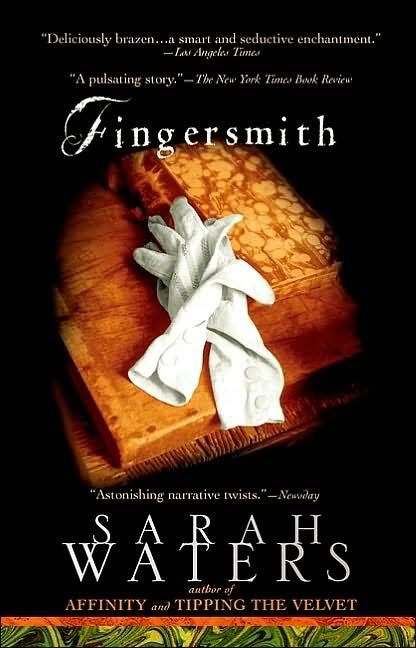
ARCHIVED REVIEW: Fingersmith (8/3/11)


Fingersmith
by Sarah Waters

"All day I sat or walked with her, so full of the fate I was bringing her to I could hardly touch her or meet her gaze; and all night I lay with my back turned to her, the blanket over my ears to keep out her sighs. But in the hours in between, when she went to her uncle, I felt her—I felt her, through the walls of the house, like some blind crooks are said to be able to feel gold. It was as if there had come between us, without my knowing, a kind of thread. It pulled me to her, wherever she was."

Susan, a girl raised among thieves in dirty Dickensian London, is sent disguised as a lady's maid to a cavernous, decaying mansion to woo an innocent, fragile, dowry-full maiden for a rogue known as the Gentleman and help him steal her fortune. She thinks the money is worth it, but all is not as it seems.

This book was excellent! The structure was a strange, measured waltz for two women: the story begins from Susan's point of view, and then, with a dramatic and always unexpected plot twist, the narrative jumps to the other girl. Each time, the same series of events is retold, and everything you assumed was truth is turned on its head. You are constantly on the edge of your seat, wondering what sudden twist the story will take next and how it will all end.

Waters has an incredible eye for detail, and understands how one gesture or sigh can be grossly misinterpreted depending on who you are and where you are standing.

The two tales braid together in a story of treachery, madness, murder, duality, and desire.

And yes, there is lesbian love. It is a lesbian Victorian Dickensian lovefest. Though not as much as I had expected, mostly unrequited passion. What sex scenes there are are beautifully emotional and sensual, rather than sordid, voyeuristic or graphic.

Very well-written, and not a word was wasted. I definitely recommend it to anyone who loves the Victorian Era's underbelly like I do.

If you liked this book, you may like:
The Devil in the White City by Erik Larson

ARCHIVED REVIEW: The Fourth Bear (8/1/11)


The Fourth Bear
by Jasper Fforde

"You don't get it, do you?... In the world of nursery crime, some things just happen, despite my best endeavors. Humpty takes a nose dive, the pigs boil the wolf -- and Riding-hood and her gran get eaten. In my world, the world of the vaguely predestined, you have to work five times as hard to involve yourself in the unfolding of the case, and ten times harder still to change the outcome." - Jack Spratt

The Fourth Bear is a very difficult novel to describe. In it's broadest sense, it is a detective novel, starring a man who solves Nursery Rhyme mysteries, the first book in the series being about the possible murder of Humpty Dumpty in his fabled fall off of the wall. This book is about the death of Goldilocks. Sort of.

Jasper Fforde yet again manages to create an incredibly complex and convoluted world. He throws dozens of plot lines up in the air at the beginning of the book: the death of Goldilocks, the serial killer The Gingerbread Man's escape from prison, the purchase of a surprisingly unused used car from a Mr. Dorian Gray, the impending marriage of the detective's daughter to Prometheus, the surprisingly banal space alien who works in his office asking his partner out on a date, the appearance of new and quarrelsome neighbors Mr. and Mrs. Punch, a porridge ring catering to addicted bears, a suspiciously giving and kind mega-corporation, and the dubious status of our hero, Detective Jack Spratt, as a PDR - Person of Dubious Reality - himself). The reader is never certain which is essential to absorb, and which is merely colorful world-building.

I was uncertain whether or not it was helpful to know the book world was actually established as a refuge for nursery rhyme characters in Jasper Fforde's other series Thursday Next. That series depicts the lives of book characters who are quite aware they are in a book. When they are "performing" for those reading the book, they follow lines and actions like they are in a play, but when they are not being read, they can do whatever they want. The first book of the Nursery Crime series was originally a dull regular detective novel, and destined never to be published, which Thursday Next hides in for while. As a reward for its help, the book becomes a refuge for nearly forgotten nursery rhyme characters and thus it rises out of its mediocrity to become an odd, quirky, successful novel.

In this second book of that world, where aliens, humans, and nursery rhyme characters exist side by side with no explanation, the characters have odd meta moments where they let the reader know they are aware they are in the book. For example, they discuss which plot device to follow: #26 Look for the serial killer even though they were ordered not to, or #38 in which they follow orders until the inept detective on the case begs for their assistance. At other times, they lament the poor jokes they were written to say. However, I was bewildered, because a book in the meta book world of Thursday Next would never be allowed to make such self-references.

Even though the story rather dense and tangled, it is still another delightful book from Fforde. He has the clever wit of a Douglas Adams with a literary bent (i.e. the town of Obscurity has dozens of graveyards because many people die in Obscurity). He leaves lots of whimsical breadcrumbs for book lovers and mystery enthusiasts alike.

The book also has "Extras". To see the website of the Nursery Crime Division, click here: http://www.nurserycrime.co.uk/

If you liked this book, you may like:

ARCHIVED REVIEW: The Name of the Wind (7/18/11)


The Name of the Wind
by Patrick Rothfuss

"It's like everyone tells a story about themselves inside their own head. Always. All the time. That story makes you what you are. We build ourselves out of that story." 

This was one of those books that everyone told me that I should read, and that I would love. And they were right! But it was not what I expected at all.

The book intrigued me from the first page, a beautiful poetic construction which I won't spoil here. It begins with our hero as a humble innkeeper, trying to keep his head down. When trouble comes to him, I expected the story to explode, as he throws off his disguise and goes off to kick some evil ass. However that is not what happens. A Chronicler comes and the innkeeper, Kvothe, tells his life story.

It has all my favorite elements, a childhood in a group of traveling players, meeting an old arcanist (scientistwizard) and learning from him, urchin-ing on the streets of a city, going to a scientistwizard university. Training montages galore! He develops into a resourceful, powerful wizard with a flare for showmanship and a disregard for authority. He therefore becomes the most notorious arcanist in the region! At times, it seemed like the book should be titled "How to Succeed in Arcanist University Without Really Trying."

With brief moments of shock and excitement, it is actually a very leisurely narrative. Yes, bad things happen, and in the first half of the book, life sucks for him. But by the second half, you know he'll get out of trouble through sheer dumb luck and cockiness. And he does. Every time. I almost wished something would blow up in his face once in a while. And I think it will, but that is for another book.

His female characters intrigue me. They are idealistic in the best sense of the word. These women are beautiful, funny, brave, and intelligent, and I want to be all of them. However, they have very few flaws. And there are so many women with whom he has a close relationship, that you have no idea who he will end up with. My hope is that he will get together with the delicate, elf-like, potentially-a-student-gone-mad girl who lives in the tunnels under the university and has a delightful way of looking at the world.

Often what struck me the most was his descriptions of love or women. I'll leave you with two examples, as they speak for themselves:

"My parents danced together, her head on his chest. Both had their eyes closed. They seemed so perfectly content. If you can find someone like that, someone who you can hold and close your eyes to the world with, then you're lucky. Even if it only lasts for a minute or a day. The image of them gently swaying to the music is how I picture love in my mind even after all these years."

"You see, women are like fires, like flames. Some women are like candles, bright and friendly. Some are like single sparks, or embers, like fireflies for chasing on summer nights. Some are like campfires, all light and heat for a night and willing to be left after. Some women are like hearthfires, not much to look at but underneath they are all warm red coal that burns a long, long while."

All in all, it is an entertaining and well-written story, but, again, it read like the first half of a book. Actually, it reads like he ran out of paper, realized he had already written 662 pages and was only partially through the story, so he tacked on an ending and started Volume II. Which I am looking forward to immensely.

This story ends with them still in the inn, having told part of the life story. I am hoping the next book will have at least mentioned a king, if not killed him (as it is called the King Killer Chronicles), and I hope Kvothe will stop telling us about his life and start doing something about the demon spiders that threaten his town. Maybe even go fight the Big Bad evil. Something to get him out of the house.

If you liked this book, you may like:

ARCHIVED REVIEW: The Guinea Pig Diaries: My Life as an Experiment (6/30/11)


The Guinea Pig Diaries: My Life as an Experiment
by A.J. Jacobs

"The goal is that you're able to keep the good parts and not descend into insanity. That the pain of the experiment will end up making life better in the end. And that your spouse will forgive you. For, as I've been told many times, my wife is a saint. A saint, I might add, who doesn't tolerate these experiments lying down."

List of some of A.J.'s experiments in this book (from goodreads):

• He outsources his life. A.J. hires a team of people in Bangalore, India, to take care of everything in his life from answering his e-mails to arguing with his spouse.

• He spends a month practicing Radical Honesty -- a movement that encourages us to remove the filters between our brains and mouths. (To give you an idea of what happened, the name of the chapter is "I Think You're Fat.")

• He goes to the Academy Awards disguised as a movie star to understand the strange and warping effects of fame.

• He commits himself to ultimate rationality, using cutting-edge science to make the best decisions possible. It changes the way he makes choices big and small, from what to buy at the grocery store to how to talk to his kids. And his revelations will change how you make decisions, too.

• He attempts to follow George Washington's rules of life, uncovering surprising truths about leadership and politics in the twenty-first century. He also spends a lot of time bowing and doffing his hat.

• And then there's the month when he followed his wife's every whim -- foot massages, Kate Hudson movies, and all. Depending on your point of view, it's either the best or worst idea in the history of American marriage.


-----
I love A.J. Jacobs, and his writing is very funny, but I felt that something was lacking in most of these experiments: a deeper, soul-searching core. While his other books delve into issues like the nature of intelligence, or the spiritual meaning behind the rules and rituals of religion, these essays flit across the surface of problems like what it is like to be a celebrity or if you can outsource your life to India.

I was intrigued by some of his experiments, like a month of uni-tasking to cure his multi-tasking mania, the month of following George Washington's rules of decorum (which appealed to the 18th century person in me), or the month of thinking rationally (as opposed to reacting with his subconscious brain). These, I felt, had a lasting lesson to teach A.J. and us, and he was changed for the better because of them. His commitment to the experiments, and the imaginative lengths to which he goes to complete them are always fascinating, hilarious and brave. I really related to him during his last two books as a compulsive knowledge seeker, myself.

However, there are moments in this book where I felt he was being a dick. He accommodatingly admits it and is uncomfortable about it, but I felt bad for his family and his Indian assistants. Luckily, his long suffering wife is there to bring him back to earth every so often.

Still an entertaining summer read!

If you liked this book, you may like:

ARCHIVED REVIEW: Fairest (6/27/11)


Fairest
by Gail Carson Levine

"I'm not a Sir, but a serf,
And my enemy's worse
Than a knight ever cursed."

Aza is the ugly daughter of a kindly innkeeper and his wife. Her singing, however, is the most beautiful in the land, and the kingdom of Ayorthea is a land whose culture is saturated in song. When a duchess brings her to the palace to wait upon her at the king's wedding, the new queen takes a liking to her and asks her to be her lady-in-waiting. Yet, all is not as it seems, and Aza is ensnared in a world of lies and deceit. Will the temptation to become beautiful prove too much for her? What will the Queen do to her if she becomes the Fairest of Them All?

I had my doubts as I began this book. The sentences were short and uncomplicated and I felt like I was on a frequently halting train. The world felt contrived, and the protagonist predictable and annoying. I thought the book overly simplistic and puerile.

As I kept reading, I discovered I was very wrong. The story is delightful and enchanting! The culture of Ayorthea was irritating to me at first, but I came to love that everyone sang what they felt: snatches of song in conversations, Sings instead of balls, songbirds in the palace, healing sings for when someone is ill. It made me wish there was more singing and more poetry in our daily lives. It added a depth of emotion and meaning to what could have been a simple dialogue.

Aza herself always felt that she was ugly. She is described as having red lips, black hair, and pale skin, but in an unattractive way. She was also described as being very large. I couldn't help picturing her attractive, if self-conscious, particularly because the cover portrays her as such.

The fairy tale the book was based on, "Snow White," never overwhelmed the story's natural course. There were flavors of "Snow White" (the girl with red lips, black hair and pale skin, the jealous queen, the magic mirror, the plot to kill the beautiful girl, the flight to the dwarves (in this case, gnomes), and the rescue by the prince) but it was all wonderfully subtle. Very few things felt forced.

The love story was beautiful. The prince loves her at first sight, and supports her through her insecurities. It was a warm and fuzzy, yet unaffected romance. Even when they hit a rocky point, you know all will turn out well.

The villain, the evil jealous queen in this Snow White tale, is not really a villain, but an incredibly insecure woman who could have a good at heart but is weak, foolish, and selfish.

And lastly, the apple of the story is not dislodged from Aza's throat with a kiss, but with a good, hearty thump on the back. That pleased me to no end.

All in all, a solid sister to Gail Carson Levine's other book Ella Enchanted.

If you liked this book, you may like:

ARCHIVED REVIEW: The Bestiary (6/16/11)


The Bestiary
by Nicholas Christopher

"If we find in the depiction of an animal an uplifting or penetrating symbol, we should not worry whether that creature really exists, or if it ever existed." - St. Augustine

Xeno Atlas was a neglected child, raised by his grandmother who told him about the animal spirits who haunt the world. So many animals die every day that the air is thick with them. Some people have animal spirits inside them, or were animals in another life.

Xeno has had glimpses of mysterious animals since he was a child, from the gargoyle from a city building that appeared at his window one night, to the fox present when his grandmother died. When he learns of an ancient book called the Caravan Bestiary, a book about the strange animals who were denied entrance to Noah's ark, he makes it his life's mission to find this book. His quest spans several decades, and several countries, and along the way he is confronted with the ubiquitous symbolic world of animals and animal imagery. In his search for the book, he finds himself and his place in the world.

This is exactly how I wish all actual memoirs were written. Each event mentioned is highly, if quietly, significant and echoes of it reverberate back and forth throughout the book. The child is abandoned when he is young, but there is less of a sense of sickly despair or resignation as an ownership and adaption. I understand that this is fiction, and the memoirs were real, so it is difficult to write about what you do not feel, but my GOD this book was refreshing.

Christopher treads the fine line between realism and fantasy. He has mystical, beautiful events that may or may not have happened, but he lets the reader judge. Xeno lives in the real world, but a world filled with wonder and mystery.

His quest for the Caravan Bestiary becomes incredibly academic, but still gripping, as your heart soars with each clue he discovers. I became quite jealous as he was able to devote his life to medieval academia in little flats he rented in Paris, Venice, and Greece. Seems perfect to me!

His life surrounding the quest for the Caravan Bestiary is also beautifully constructed. As his father never sees him, he creates his own family, a boy named Bruno who is a sickly biology genius hell-bent on keeping animals from extinction, and Bruno's sister, Lena, a gentle, reserved veterinarian. Occasionally, his life is shattered and he has to pick up the pieces.

The story weaves back and forth from light to dark, from heaven to hell, and the sharp contrast makes each more acutely felt. The one small thing that irked me about the book was that Christopher seemed to be foreshadowing a sinister event that never came. I wonder if anyone else had the same experience?

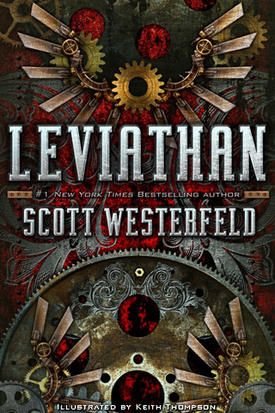
ARCHIVED REVIEW: Leviathan (6/13/11)


Leviathan
by Scott Westerfeld

"Maybe this was how you stayed sane in wartime: a handful of noble deeds amid the chaos. "

I had fallen off the YA bandwagon for a while, and felt the genre was too simple for my taste. Leviathan has changed all of that!

The world is quivering on the brink of WWI. However, it is WWI with a Steampunk twist. The "Clanker" nations (read "Axis powers") have developed not tanks but walking war machines. They rely on metal and steam for their incredibly complex technology. The "Darwinist" countries, the allies (mostly England), have gone the opposite route. Darwin not only discovered natural selection, but DNA and how to manipulate it. British technology is entirely biological, using genetically modified animals, and built-in ecosystems to make their nation run. For example, their zeppelin-like Leviathan is actually a large sky whale with a hollow interior that produces its own hydrogen with the help of the bees and birds who give it its needed fuel every day. Hydrogen sniffers (dog/ spiders) run along its skin to make sure no leaks have sprung.

Enter our protagonists: Alex, a prince of Austria, who dreams of battle, and finds himself dragged out of bed one night, his parents murdered, and forced to run for a safe haven in the Swiss Alps. Deryn, a girl pretending to be a boy to join the British Air Service, finds herself on an important mission to escort a female scientist and her secret cargo to an unknown location. Of course, their story lines crash together and they must work together to survive.

This book was incredibly well-written. The world building alone is admirable and wonderfully creative. The world of the Clankers is easy to imagine, but the world of the Darwinists takes a bit of a stretch. Some might balk at the idea of genetic modification, but Alex and Deryn constantly argue which lifestyle is better, and you get to see both sides. The book also contains intricate illustrations, as even the best descriptions in the book do not fully capture the complexity of creatures like Huxleys (hot air balloon jellyfish creations).

The two main characters are also highly developed and have a clear journey throughout the book. Alex starts as a spoiled brat, but is forced into situations that make him mature with surprising strength and fiber. I was immensely impressed with how Westerfeld treated the character of Deryn. She has small moments where her disguise is mentioned and she has to struggle to hide her girlhood. However, most of the time he treats her as a human being, not a fish out of water. She is gutsy, brash, wry and impertinent. She is a skillful flyer from the get-go, and only improves. As to the inevitable romance looming in every YA book, it isn't mentioned until the end of the book, and even as a mere blip on the radar.

The one...flaw? I found was that it read as the first half of a book. It is the first of two books, but it felt cliffhanger-y, like the first part of a Doctor Who two-part episode. It has a small resolution, but I would have rather had one big book than two small ones. It was certainly not a large enough to put me off the book!

If you liked this book, you may like:

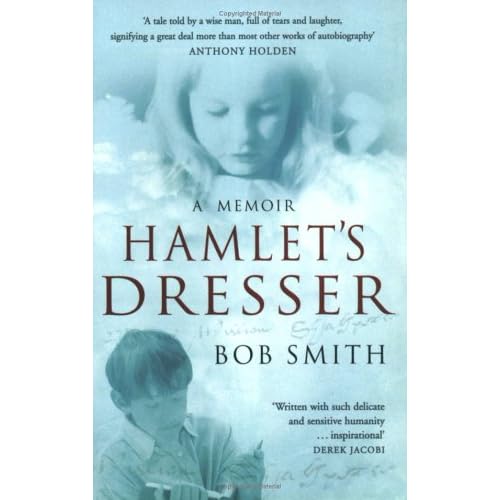
ARCHIVED REVIEW: Hamlet's Dresser (5/4/11)


Hamlet's Dresser
by Bob Smith

"In sooth, I know not why I am so sad." - Merchant of Venice

Hamlet's Dresser is yet another memoir about how Shakespeare saved someone's life, and luckily I did not have to stop this one half way through.

Bob Smith is a troubled child, haunted and scarred by his unstable mother, his absentee father and his mentally retarded sister. He turns inward and finds solace in the words of Shakespeare. His life is rocky until he embraces his calling as a Shakespeare scholar, and, with this memoir, heals the wounds of his past.

Unlike Ghostlight, a plodding linear narrative that got stuck in the mire of his early childhood trauma, Hamlet's Dresser bounces around in time, from his childhood to his adulthood to various points on the timeline between. While this keeps the story from stagnating, it feels a bit arbitrary at times. Smith will finish telling a tale, and then plop you right down in the middle of it again a page or so later, which is disorienting if you care about chronology.

I did thoroughly enjoy his entry points to Shakespeare. Often, he would tell a story from his life, and then finish it with a quote from Shakespeare, and, juxtaposed, they would illuminate each other. You were able to feel the universal nature of the personal story, while at the same time discovering that Shakespeare knew what he was talking about.

He also excellently portrayed the effects of growing up as a child of a Catholic family in the 1960s, and the dents and scratches, and even lifelong burdens you get from careless things that adults and parents say. At a young age, when the world is still a mystery, you gather and retain information like a sponge, and something said in jest can reverberate through your head years later.

I do find it hard to review memoirs. It's not a fiction, or a piece of artwork that you can objectively analyze. It is a person's life, opened raw and naked, and told in the way he sees it.

Pushing past that a bit, I felt he spent too much time on his sister and his mother. His sister became a millstone around his neck, and though he loved her, he was always haunted by her half-formed presence, comparing her often to mad Ophelia. His mother would today be diagnosed as manic depressive or bipolar and she used him as a crutch rather than as a son. Several stories establish this dynamic, but they continue for half the book. Even with the jumping around, you don't get to the point when he starts working for a theater and becomes the titular Hamlet's dresser until about 3/4 of the way in.

However, this is an excellent book for examining the effect that high art can have on personal stories, not only Bob Smith's but those he loves. However, the pain of his story can often leave you exhausted and dripping with bits of his depression.

ARCHIVED REVIEW: Enna Burning (4/19/11)


Enna Burning
by Shannon Hale

Enna Burning is the second in an unexpected fantasy series that began with an excellent one-off fairy tale adaptation (The Goose Girl), and surprised the writer with more stories to tell.

Enna is a forest girl who worked in the capital city before her mother died. She left the city to take care of her brother who returns one day with a mysterious parchment and the ability to set things on fire. His behavior becomes violent and erratic, and eventually leads to his destruction. Enna has a deep desire to understand her brother, and reads the parchment, learning the language of fire. She thinks she can handle it better than her brother, but the draw of power and destruction begins to consume her.

This is a mediocre book from a great author. The language is beautiful, and Hale is an excellent storyteller, but she only has one note in this book, and she plays it loud. Replace fire with drugs, anger, or power, and you get a fantasy after school special. Enna gets into [fire] because her older brother is doing it, and she wants to understand him. [Fire] kills her older brother. Enna promises that she will not harm anyone with [fire] and feels she can handle it better than him. She begins to use it more and more, and gets addicted to it. [Fire] alienates her from her friends, and its influence is used against her in an abusive relationship. In the end, her friends show her how much they love her and they help her get over it.

Don't get me wrong; her struggle is often fascinating. Hale's description of how to use fire is very tangible: she seeks the heat of living things, draws it into the hollow at the center of her chest, and shoots it out at things that can burn. It is a perfect analogy for the addictiveness of anger. Hale also expertly crafts Enna's self-manipulation, an incisive examination of how we bend our perception of the world to justify our actions.

I am finding it difficult to review YA fiction after my stint of adult fiction. I realize they are not supposed to be as complex as adult fiction, but it is hard for me to tell if its just too simple for me at my age, or too simple for anyone. However, I do know that The Goose Girl, the first in her Books of Bayern series, was more intricate and engaging by far. I only recommend this if you wish to explore the world of Bayern more, and discover what happens to the characters of Goose Girl.

If you liked this book, you may like:
The Goose Girl by Shannon Hale
Fairest by Gail Carson Levine

ARCHIVED REVIEW: Weaveworld (4/7/11)


Weaveworld
by Clive Barker

"Nothing ever begins. 
There is no first moment; no single word or place from which this or any story springs.
The threads can always be traced back to some earlier tale, and the tales that preceded that; though as the narrator's voice recedes the connections will seem to grow more tenuous, for each age will want the tale told as if it were of its own making." 
— Clive Barker (Weaveworld)

Its odd the tiny things that can change your life, the things that can happen when you take one step out of your routine. Cal follows an escaped bird and Suzanna reluctantly accepts a gift from her dying grandmother and they are ripped from their mundane, safe lives, and jarringly shoved into place as unlikely saviors of a world of wonder in a battle that threatens to tear London apart.

Having only read Clive Barker's YA Abarat series, I had expected a intricate, dark, and mind-blowingly beautiful story, but in this story he ratchets it up to 11! He still gleefully creates paradoxical creatures of unexpected beauty and horror like a macabre Dr. Seuss. While having the occasional "lets see how many odd combinations of things I can list to show how creative I am" page or two, the Weaveworld (the fairy land of choice in this story) he sculpts is a world worth fighting for. I was reminded of Neil Gaiman, but while Gaimain often flits gleefully on the surface of darker issues, Barker takes a submarine.

As Cal and Suzanna struggle to save the Weaveworld (which for 100 years has been sleeping in carpet-form), they are pursued by formidable enemies. A nightmarish trio of women (ala the weird sisters)are the first: the Immacolatta, the severe, tantalizingly icy virgin, the Magdalene, a grotesquely sexualized being who rapes men and gives birth to their monstrous offspring, and the Hag, a skeletal, unseeing specter. Shadwell, a smiling human salesman with a jacket that gives all who look at it their hearts desire, but at the cost of their will, is first their tool and them moves to prominence as the enterprising villain of the piece. The rogues gallery is rounded out by my favorite character of all, Hobart, a mad vigilante policeman who dreams of burning all disorder from the world as he peruses our heroes like a strangely sympathetic Javert from hell. The Scourge, the actual Big Bad, is a faceless horror that lurks in the background til the very end.

The main thing in reading this book is to trust Barker. There are moments, especially in the beginning, when you wonder where this is all going, why he introduced this element so immediately, etc. Believe me, he knows what he is doing. While unconventional, it is one of the more structurally satisfying books I have ever read. Just ride in his little rickshaw from the gates of heaven to the mouth of hell and back again.

If you like this book, you may like
Abarat by Clive Barker
Neverwhere by Neil Gaiman
American Gods by Neil Gaiman

ARCHIVED REVIEW: The Sisterhood of the Traveling Pants Series (2/28/11)

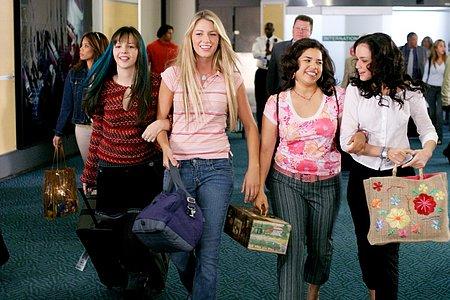
(Image from the movie, but they were so perfectly cast!)

The Sisterhood of the Traveling Pants Series
by Ann Brashares

" Try, reach, want, and you may fall. But even if you do, you might be okay anyway. 
If you don't try, you save nothing, because you might as well be dead."
— Ann Brashares (Girls in Pants: The Third Summer of the Sisterhood)


This is a bit unfair, but it is a review of the entire series. Yes I am lazy.

Basically, I love these books. They let you into the mind of the teenage girl. You read them and completely understand the mess they are, and you can step outside them and see how their actions compliment their feelings, but are incredibly inexplicable for those who don't know what they are thinking. For boys, these are good "Girls are Insane. Here is Why" books.

The four girls are vibrant, full of growing, and messed up, like all teenagers. I found myself getting really bored with all the story lines about boys, and really engaged in the stories about their careers and their family. Lena: fighting for her art class and her relationship with her dad. Bee: her archeology and her healing cocoon of a summer in Alabama after a traumatic experience. Carmen: her acting, and her new baby brother (and Win... yes he is the one boy who did not seem to come with any baggage, or sleep with/ emotionally shred a girl). And Tibby: Bailey, of course, and the rediscovery of herself through her film class.

A side note about the boys: Sex=bad in these books. Its often good in the moment, but then as soon as the afterglow has worn off, life goes to shit. In two cases, the girls ended up in an emotional maelstrom, and the last one is meh, alas I did not have sex for love and it was casual and ok but nothing big. I understand that the author does not want the message of her books to be sex alla time= amazingness to teenage girls, but I think it would have been healthy to have one sexual encounter that was not total shit. And its sad that the one boy character who doesn't mess anyone up just fades away between books.

Regardless, the stories are structured really well! Each small section builds to a climax moment, and then she switches characters. It keeps you going, especially for those of us who find it hard to read for hours and hours.

These may even be better for those of us who have grown up and are looking back on high school. At 14-19, even 14-21, you were in the midst of this and so it was hard to see the bigger picture. The girls were just a bit bigger and more alive than you. Their experiences and adventures were just beyond your reach. Now, as an adult, watching these young girls grow and change and realize things about themselves, you are able to step outside the drama and learn from their experience.

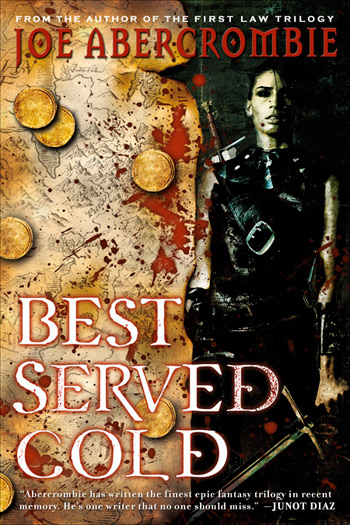
ARCHIVED REVIEW: Best Served Cold (2/6/11)


Best Served Cold
by Joe Abercrombie

"You were a hero round these parts. That's what they call you when you kill so many people the word murderer falls short." 
— Joe Abercrombie (Best Served Cold)

After being chucked off a balcony to her (supposed) death, Monza Murcatto swears revenge on the seven men who put her there. Along the way she gathers a rag-tag band of the usual morally vague mercenaries: a self-aggrandizing poisoner and his doll-faced apprentice, an OCD thug, a foppish old enemy/friend and expert swordsman, Vitari the redheaded torturer from the First Law series, and Shivers, the Northman who is trying to be a better man, but still needs to eat. They cut a bloody swath through Styria as each of Monza's murderers fall prey to her wrath. But revenge is not as fulfilling as Monza thought.

This book is not as complex as his first trilogy, but then again, he is trying to fit a story arc into one book instead of three. It took me a while to get invested, and due to the episodic nature of the book (a section per kill) I found certain sections lost my interest.

That being said, this was yet another fantastic book! Monza and Shiver's cross character development was incredibly compelling: as one was crawling tentatively up the morality scale, the other was sliding steadily down. And again, Joe Abercombie continues to create unexpected characters, for example, the monosyllabic, OCD thug who must compulsively count everything, lives his life by what number he rolls on his dice, and wants nothing more than to go back to the rigid schedule of prison.

When it comes to violence, there is no man better than Abercrombie. His training in film editing creates incredibly clear and morbidly creative fight scenes. I started to really pay attention starting with the macabre, Mardi-Gras-like slaughter at an upscale brothel.

He is also the master of plot twists. Just when you think you know the story formula, he turns the outcome on its head. Even when you think you've got Abercrombie's tricks down, he changes tactics. He then subtly drops plot hints like bread crumbs and the suspense is generated while you are waiting for the characters to realize what you have already seized upon. He creates moments where both Monza and the reader wishes to grant mercy, but he relentlessly serves the story alone, and gives no quarter.

Oddly enough, Joe Abercrombie at last gives the reader what passes in this world as a happy ending (compared to the ending of the First Law). The same ambiguity shrouds the denouement of this book as the other, but there is hope for redemption and change for good, rather than the threat of corruption. And a new player enters the game to potentially turn the tables on the evil done in the First Law Trilogy.

I definitely recommended it for those who love dark, gritty fantasy, or those who are bored with the hearts-and-flowers, "the good guys win and we all learn something uplifting about the world," done-to-death plots.

Wednesday, October 12, 2011

ARCHIVED REVIEW: The Magicians (1/4/11)


The Magicians
by Lev Grossman

"For just one second, look at your life and see how perfect it is. Stop looking for the next secret door that is going to lead you to your real life. Stop waiting. This is it: there's nothing else. It's here, and you'd better decide to enjoy it or you're going to be miserable wherever you go, for the rest of your life, forever." 
— Lev Grossman (The Magicians)

From the back of the book: "Quentin Coldwater is brilliant but miserable. A high school math genius, he's secretly fascinated with a series of children's fantasy novels set in a magical land called Fillory, and real life is disappointing by comparison. When Quentin is unexpectedly admitted to an elite, secret college of magic, it looks like his wildest dreams may have come true. But his newfound powers lead him down a rabbit hole of hedonism and disillusionment, and ultimately to the dark secret behind the story of Fillory. The land of his childhood fantasies turns out to be much darker and more dangerous than he could have imagined..."

This was an excellent book for both die-hard, old-school honor-and-glory fantasy and for the modern urban fantasy cynics. It is stuffed to the gills with winks and nods to Narnia, Harry Potter,and a little sprinkling of the Wizard of Oz. Its both an homage to and a satire of these idyllic fantasy worlds. It examines the real consequences of what would happen if you take a depressed angsty teenager and give him incredible power, and then set him out in the world where there are no epic battles to fight, no quest to follow.

The Brakebills school section is charming and intricate. Magic is hard and complex and yet there is still the college atmosphere of late night drinking with a tight gang of friends, and warm days of doing nothing. There are dark threads that hint at the corrosion and danger to come, but the Brakebills part could be its own separate book.

The post-college section feels like Hemingway, or F. Scott Fitzgerald, about the now-graduated students, a group of young people who have all the power and money in the world but no direction. They inevitably spiral into sex, drugs, and self-loathing.

And then suddenly, out of the blue, one of them discovers their way into Fillory: the magical land of their childhood dreams. They will go on a quest and becomes kings and queens! Surely it will make all their hurt and meanness melt away, and they will become their better selves in the presence of Ember and Umber, the magical ram gods (Aslan in sheep's clothing). But Fillory is not like the books. Well, it is, but think about the paragraph long description of a battle in the Chronicles of Narnia, and what it is actually like to be there, to kill something, and to watch your friends die. Reading about it is a lot easier than doing it.

In Fillory, Quentin has to go through a crucible of spirit, and in the end, you are not sure if he is truly whole or healed, or even if he is on the right track. But you hope so, and you want to see what happens next.

Luckily, the sequel comes out this summer!

If you liked this, you may like:
The Chronicles of Narnia
Harry Potter
The Wizard of Oz

ARCHIVED REVIEW: Kate Remembered (12/2/10)


Kate Remembered
by A. Scott Berg


So I finished this book a while ago and have moved on to reading Harry Potter again before summer.

But this book was wonderful and engaging. It is the memoirs of a professional biographer and his long friendship with Katherine Hepburn. He felt he couldn't do a real biography because he loved her so much, he couldn't be objective.

It is incredibly beautiful and incredibly sad as we listen to Katherine reminisce to Scott about her life, her patient, quiet, and giving love of Spencer Tracy, her ups and downs, and how Scott himself remembers the slow tragedy of her death.

She was a hell of a woman. She went swimming every morning in the lake, no matter what the temperature, even into her later years. She always insisted everyone make their beds in the morning (she scolded Michael Jackson when he told her he didn't know how), and she spoke her mind at every turn. She was blunt and harsh and told the truth as she saw it, and people loved her for it. She made many flops, and she acknowledged them openly, but she also gave some of the most brilliant performances the world has ever seen (my two favorite are Lion in Winter and Guess Who's Coming to Dinner).

This book is not a biography, so it may frustrate some people when Scott Berg starts talking about the other books he was writing at the time and not about Kate, but it is worth it to hear her story from her own mouth, and from one who loved her.