Showing posts with label libraries. Show all posts

Tuesday, May 21, 2013

REVIEW: Mr. Penumbra's 24-Hour Bookstore by Robin Sloan


Mr. Penumbra's 24-Hour Bookstore
by Robin Sloan

“Walking the stacks in a library, running your finger down the spines — it’s hard not to feel the presence of sleeping spirits.” 

Clay Jannon is desperate for a job after being laid off when the snazzy bagel company he was marketing for went belly up. When he notices a help wanted sign on the door of an independent bookstore, he is ready to try anything. As soon as Mr. Penumbra asks "What do you seek in these shelves?" Clay is hooked. It turns out this book store has secrets. Sure, it carries the the requisite number of unappreciated works of genius Penumbra loves, but in the dark corners of the store, towards the top of the tall shelves, there are books for a special clientele. They come in, return a book, and borrow a new one, all eager to continue with solving the mysteries within those pages. The curious Clay and his friends (a programmer, a CEO, a maker, an anthropologist, and more gathered along the way) follow the trail of breadcrumbs that may lead to the secret of this secret society: the formula for immortality.


I quite enjoyed this book! The structure of Mr. Penumbra comes across as a gentler Murakami or a less overwhelming Stephenson (he actually references both authors). I put it as a more modern G.K. Chesterton, lightly examining complex ideas in a reflective, fun adventure that reveals a comprehensive, heart-warming, humanistic truth. What really is immortality? How important is it?

Sadly, the stakes are rather low. Clay does not have much investment in whether the books of the secret society are decoded or not. He does not believe they hold the secrets to eternal life, but he is doing it for his friend. And the stakes tend to stay at about medium throughout the entire book. However, what it lacks in stakes it makes up for in pure librarian nerdery.


This is the perfect book for library nerds! It mixes everything that is important to us, the old and the new, ancient typography with computer fonts, secret codes with computer codes, ebooks and regular books, CGI with clay models, artifact warehouses with high tech systems, smelly bookstores and shiny Google. Sloan appears to have a great working knowledge of both sides of the information coin, and it is delightful to read.

The surprising thing is, the sides are not pitted against each other, except by the villains of the book. The protagonists are all about integration and collaboration, using new technology to preserve and enhance the old, how "Old Knowledge" (information in books that have not yet been digitized) is the great untapped mystery to Google. And yet, new technology does not replace books. They live in harmony side by side and feed off of each other, just as Clay's team of experts all have special skills (programming, fabrication, graphic design, anthropology, hacking, museum curating, etc) that mix together to create intellectual alchemy. There is a section about "digital archaeology," which blew my mind. I had never thought of it before.

I found it extra delightful that the author/ and Clay, is a NERD nerd. When he was a kid, he and his friend Neal were obsessed with a series called The Dragon-Song Chronicles and played "Rockets and Warlocks" (a tabletop RPG). Questing language is infused throughout the book. It is not uber present, but occasionally you are stumble upon delightful sentences like this: "I explain it like the set up for a Rockets and Warlocks adventure: the backstory, the characters, the quest before us. The party is forming, I say: I have a rogue (that's me) and a wizard (that's Kat). Now I need a warrior. (Why does the typical adventuring group consist of a wizard, a warrior and a rogue anyway? It should really be a wizard, a warrior and a rich guy. Otherwise who's going to pay for all the swords and spells and hotel rooms?" And we find Clay listening to The Dragon-Song Chronicles over and over like an old song he knows very well, much like the way I reread the Chronicles of Narnia.

Two things sealed the deal with this book for me. First, my version glows in the dark. I did not know this until the last night I was reading it and I turned out the lights to go to bed, and BAM! It glowed.

Second was the final paragraph of the book which, as a library nerd, made me cry:

"A man walking fast down a dark lonely street. Quick steps and hard breathing, all wonder and need. A bell above a door and the tinkle it makes. A clerk and a ladder and warm golden light, and then: the right book exactly, at the right time."

Books Like This:
The Man Who Was Thursday by G.K. Chesterton
Hard-Boiled Wonderland by Haruki Murakami
The Bestiary by Nicholas Christopher

Monday, May 14, 2012

REVIEW: Un Lun Dun by China Mieville


Un Lun Dun
by China Mieville

"'There it was in the index. "Shwazzy, Sidekicks of the.'' Below that were subheadings, each with a single page reference. 'Clever One,' she read. 'Funny One.' 

'Look...' the book said. 'It's just terminology. Sometimes these old prophecies are written in, you know, unfortunate ways...'

'Was it Kath who was supposed to be the clever one?' Deeba said. She thought about how she and Zanna had become friends. 'So... I'm the funny one? I'm the funny sidekick?'

'But, but, but,' the book said, flustered. 'What about Digby? What about Ron and Robin? There's no shame in -'

Deeba dropped the book and walked away. It yelped as it hit the pavement."

Deeba has noticed something strange about her best friend Zanna. There was a picture of her face in the clouds. Animals behave strangely around her. Someone spray painted "Zanna forever!" on the wall. When Zanna and Deeba follow a strangely animated umbrella one night, they leave London and enter Un Lun Dun where Zanna is proclaimed "the Shwazzy": the Chosen One who will help save their city from the Smog. Only things don't happen exactly as they were prophesied and Deeba has to take on her friend's mantle to save the city she has come to love.

This book was pretty insane. And awesome. It took me a while to get used to the world; trash with a life of it's own, city bus airships, men with pins in their heads and clothes of books, houses with forests in it, a man who is a bird with a human body as it's vehicle, "binjas" (trash can ninjas), bookaneers (librarian adventurers), the Umbrellissimo (the man who controls the broken umbrellas that find their way to Un Lun Dun). It helped as soon as I started picturing it animated like a Studio Gibli film.

I loved the way it played with the idea of choice and free will, of prophecy and how it limits us. How those who were not supposed to do things can just say "fuck it" and do them because they need to be done.

This is another juvenile fiction book that does not coddle the reader in any way shape or form. Mieville paints, waltzes and plays chess with words. It doesn't matter that a word is not supposed to be in the vocabulary of a child. There is an incredible sequence with Mr. Speaker, the leader of words, who speaks and Utterlings appear to do his bidding. Deeba cleverly banters with him that words do not always mean what we want and turns his words against him.

Deeba is an amazing heroine. First, she has brown skin, which I am sorry to say is rare in science fiction and fantasy. I was so happy to see a non-white heroine! Second, she is urban London, lower class, and speaks in London slang. Another anomaly in sci fi/ fantasy. Third, she is clever as all get out. She outwits and logics (or un-logics) her way around Un Lun Dun, learning the rules, using them, and breaking them as she sees fit. She goes from being a side kick who just wants to go home to a true heroine and full-blooded citizen of Un Lun Dun.

Yet another kickass heroine who must lead her troops into battle, deal with losses, make mistakes, and outwit terrible enemies. And in the end, when she must choose between Un Lun Dun, and real London, she turns convention on its head!

And I must say, the epilogue is one of those pump-your-fist-in-the-air-yelling-WOOO! moments. Damn, it's a fun ride.

REVIEW: The Girl Who Circumnavigated Fairy Land in a Ship of her Own Making by Catherynne M. Vanente


The Girl Who Circumnavigated Fairyland in a Ship of her Own Making
by Catherynne M. Valente

“There must be blood, the girl thought. There must always be blood. The Green Wind said that, so it must be true. It will be all hard and bloody, but there will be wonders, too, or else why bring me here at all? And it's the wonders I'm after, even if I have to bleed for them.”

September is a heartless girl, bored of her life, fed up with her mom who works in a factory all the time, and with her dad who left for war. So, when the Green Wind comes to abduct her to Fairyland, she doesn't even say goodbye, or leave a note. She must do favors for witches, befriend a wyverary (a wyvern whose father was a library), outwit the evil Marquess, and, as the title implies, circumnavigate fairy land after she looses her shadow and her heart.

This was an exceptional book, even more exceptional that it was juvenile fiction. It did not pull punches, either emotionally, complex-ily (if that is a word... meaning that it did not paint the world in black and white), and vocabularically.

It reads as a modern day Alice in Wonderland. September is just as curious, just as impertinent, and just as heartless as Alice, and she meets strange and fantastic things, like the herds of bicycles that roam the land, or the half-people who can only speak in complete sentences when joined together, discarded furniture that takes on a life of its own when it is 100 years old, or the land of Autumn.

While Alice simply wanders and has things happen to her, however, September struggles with morality in a morally grey world (does she aquiess to the evil queen to save her friends? Is the evil queen very different from herself?). There is a wonderful theme of what it is to be chosen and what it is to make a choice.

Early in the journey, she is given the choice to loose her way, lose her mind, or loose her heart. Since she was heartless, she chose to loose her heart. She managed quite well until she grew to deeply care for the friends she made. When she looses them, all hell breaks loose, and you can see what a twelve-year-old girl is really capable of.

This is not pretty Narnia adventure hardship. September must make a raft using her clothes and her hair so she stands naked and shorn against the elements. She bludgeons a fish to death out of desperation, and nearly die horribly several times to get where she needs to go, and even then, she has not faced the worst.

She is the embodiment of badass heroine who does what needs to be done and sacrifices what she has to to save the ones she loves.

It also make an incredible statement about regulation. The marquess has started to bring over rules and regulations to Fairyland to make it "safe" for children who cross over. But that is not the point of Fairyland. It must be dangerous and hard, so the children can emerge strong and confidant and brave. Same thing could be said with a lot of things in our world, including regulation of books and education.

I recommend this to everyone!


There are so many good quotes, I have to add this one at the bottom:

“When you are born,” the golem said softly, “your courage is new and clean. You are brave enough for anything: crawling off of staircases, saying your first words without fearing that someone will think you are foolish, putting strange things in your mouth. But as you get older, your courage attracts gunk, and crusty things, and dirt, and fear, and knowing how bad things can get and what pain feels like. By the time you’re half-grown, your courage barely moves at all, it’s so grunged up with living. So every once in awhile, you have to scrub it up and get the works going, or else you’ll never be brave again.” 

Friday, March 9, 2012

REVIEW: This Dark Endeavor: The Apprenticeship of Victor Frankenstein by Kenneth Oppel


This Dark Endeavor: The Apprenticeship of Victor Frankenstein
by Kenneth Oppel

Young Victor Frankenstein and his twin brother Konrad live in a large mansion in Bellerive with their mother, father, two young brothers, their cousin Elizabeth, and occasionally their best friend Henry Clerval. While their lives are relatively happy, there is tension between the twins: Konrad the bright shining one, and Victor, his darker, more ambitions shadow. When Konrad falls ill, Victor is consumed by the mission to save him, even if it means delving into mysterious and potentially dangerous science.

This book is a very quick read! It is an adventure story, through and through, with intense and gripping action sequences as Victor, Elizabeth and Henry make a deal with a shady former-alchemist and fight to get the ingredients for Konrad's cure (high treetops with vicious vultures, deep and treacherous caves, and a final very personal ordeal).

The most compelling element for me was how Oppel takes the older Victor, Elizabeth, and Henry of the classic story and works backwards to extrapolate how they came to be who they are in Frankenstein. Victor is the most successful of all. He is both protagonist and antagonist. He has good intentions, but his passion, selfishness, vanity, and blind ambition distort his thoughts. He is a villain who doesn't know he is a villain; my favorite kind. And in many ways, he is your typical teenage boy, full of jealousies and too many hormones for his rational mind to handle.  It is easy for me how this Victor became the Victor of Mary Shelley's horror story. His need for power and dominance, his obsession with science and of gaining mastery over life and death to save his brother, his disregard for the effect of his actions on others are all classic Victor. He will sacrifice anything, even himself, to get want he wants. 

Oppel also allows us some wonderful and gruesome moments of the sublime. The sublime, as defined to me in school when we studied Frankenstein, is something that instills a mix of awe and terror, which often occurs when you see the Monster. Like a gristly car crash from which you cannot look away. They are scattered sparingly through out the book, but when Victor is confronted with one of those gristly images, or participates in a horrific act, you can see the subtle fascination it holds for him. Skin separated from bone, cutting through innards to get to the contents of a stomach; it attracts him as it repulses him. 

While there is less existential discussion in this one as there is in Mary Shelly's book, it is perfect for middle school and early high school students wrestling with issues of their own, and a great entry point for the classic Frankenstein.

Books like this:

Thursday, October 13, 2011

ARCHIVED REVIEW: The Name of the Wind (7/18/11)


The Name of the Wind
by Patrick Rothfuss

"It's like everyone tells a story about themselves inside their own head. Always. All the time. That story makes you what you are. We build ourselves out of that story." 

This was one of those books that everyone told me that I should read, and that I would love. And they were right! But it was not what I expected at all.

The book intrigued me from the first page, a beautiful poetic construction which I won't spoil here. It begins with our hero as a humble innkeeper, trying to keep his head down. When trouble comes to him, I expected the story to explode, as he throws off his disguise and goes off to kick some evil ass. However that is not what happens. A Chronicler comes and the innkeeper, Kvothe, tells his life story.

It has all my favorite elements, a childhood in a group of traveling players, meeting an old arcanist (scientistwizard) and learning from him, urchin-ing on the streets of a city, going to a scientistwizard university. Training montages galore! He develops into a resourceful, powerful wizard with a flare for showmanship and a disregard for authority. He therefore becomes the most notorious arcanist in the region! At times, it seemed like the book should be titled "How to Succeed in Arcanist University Without Really Trying."

With brief moments of shock and excitement, it is actually a very leisurely narrative. Yes, bad things happen, and in the first half of the book, life sucks for him. But by the second half, you know he'll get out of trouble through sheer dumb luck and cockiness. And he does. Every time. I almost wished something would blow up in his face once in a while. And I think it will, but that is for another book.

His female characters intrigue me. They are idealistic in the best sense of the word. These women are beautiful, funny, brave, and intelligent, and I want to be all of them. However, they have very few flaws. And there are so many women with whom he has a close relationship, that you have no idea who he will end up with. My hope is that he will get together with the delicate, elf-like, potentially-a-student-gone-mad girl who lives in the tunnels under the university and has a delightful way of looking at the world.

Often what struck me the most was his descriptions of love or women. I'll leave you with two examples, as they speak for themselves:

"My parents danced together, her head on his chest. Both had their eyes closed. They seemed so perfectly content. If you can find someone like that, someone who you can hold and close your eyes to the world with, then you're lucky. Even if it only lasts for a minute or a day. The image of them gently swaying to the music is how I picture love in my mind even after all these years."

"You see, women are like fires, like flames. Some women are like candles, bright and friendly. Some are like single sparks, or embers, like fireflies for chasing on summer nights. Some are like campfires, all light and heat for a night and willing to be left after. Some women are like hearthfires, not much to look at but underneath they are all warm red coal that burns a long, long while."

All in all, it is an entertaining and well-written story, but, again, it read like the first half of a book. Actually, it reads like he ran out of paper, realized he had already written 662 pages and was only partially through the story, so he tacked on an ending and started Volume II. Which I am looking forward to immensely.

This story ends with them still in the inn, having told part of the life story. I am hoping the next book will have at least mentioned a king, if not killed him (as it is called the King Killer Chronicles), and I hope Kvothe will stop telling us about his life and start doing something about the demon spiders that threaten his town. Maybe even go fight the Big Bad evil. Something to get him out of the house.

If you liked this book, you may like:

ARCHIVED REVIEW: The Bestiary (6/16/11)


The Bestiary
by Nicholas Christopher

"If we find in the depiction of an animal an uplifting or penetrating symbol, we should not worry whether that creature really exists, or if it ever existed." - St. Augustine

Xeno Atlas was a neglected child, raised by his grandmother who told him about the animal spirits who haunt the world. So many animals die every day that the air is thick with them. Some people have animal spirits inside them, or were animals in another life.

Xeno has had glimpses of mysterious animals since he was a child, from the gargoyle from a city building that appeared at his window one night, to the fox present when his grandmother died. When he learns of an ancient book called the Caravan Bestiary, a book about the strange animals who were denied entrance to Noah's ark, he makes it his life's mission to find this book. His quest spans several decades, and several countries, and along the way he is confronted with the ubiquitous symbolic world of animals and animal imagery. In his search for the book, he finds himself and his place in the world.

This is exactly how I wish all actual memoirs were written. Each event mentioned is highly, if quietly, significant and echoes of it reverberate back and forth throughout the book. The child is abandoned when he is young, but there is less of a sense of sickly despair or resignation as an ownership and adaption. I understand that this is fiction, and the memoirs were real, so it is difficult to write about what you do not feel, but my GOD this book was refreshing.

Christopher treads the fine line between realism and fantasy. He has mystical, beautiful events that may or may not have happened, but he lets the reader judge. Xeno lives in the real world, but a world filled with wonder and mystery.

His quest for the Caravan Bestiary becomes incredibly academic, but still gripping, as your heart soars with each clue he discovers. I became quite jealous as he was able to devote his life to medieval academia in little flats he rented in Paris, Venice, and Greece. Seems perfect to me!

His life surrounding the quest for the Caravan Bestiary is also beautifully constructed. As his father never sees him, he creates his own family, a boy named Bruno who is a sickly biology genius hell-bent on keeping animals from extinction, and Bruno's sister, Lena, a gentle, reserved veterinarian. Occasionally, his life is shattered and he has to pick up the pieces.

The story weaves back and forth from light to dark, from heaven to hell, and the sharp contrast makes each more acutely felt. The one small thing that irked me about the book was that Christopher seemed to be foreshadowing a sinister event that never came. I wonder if anyone else had the same experience?

Wednesday, October 12, 2011

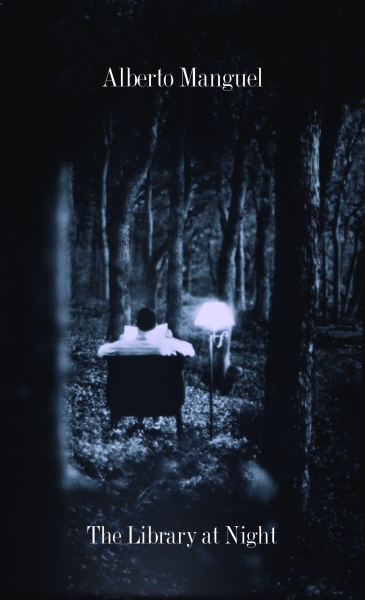
ARCHIVED REVIEW: The Library at Night


The Library at Night
by Alberto Manguel

Ok so I have been done with this book for a while, so I can't really remember a lot of it. I'm grasping at fleeting impressions, and using a few notes I took.

This book examines libraries through the lens of different concepts: Library as Myth, Library as Space, Library as Power, Library as Identity, etc.

I was not prepared to like this book, as the author spent most of the first chapter expounding on how awesome libraries are, his in particular. But then he got into the historical bits and I loved it!

For example, there were public libraries dating back to ancient Rome. People would read aloud to themselves, before the idea of silent reading caught on, the Warburg library was cataloged more by the movement of the world soul than by logic. And that ancient libraries were very like our own:

“May Ishtar bless the reader who will not alter this tablet nor place it elsewhere in the library and may she denounce in anger he who dares withdraw it from the building.” – Mesopotamian tablet 7th cent B.C.

I also found it rather uncanny that when I was having difficulty cataloging the Luce, the book would talk about the difficulties of cataloging, and when I was running out of space, it would talk about the problems of fitting your books where they need to be.

And it had great quotes and ideas:

“If an image of the cosmos can be assembled and preserved under a single roof (as King Ptolemy must have thought) then every detail of that image – a grain of sand, a drop of water, the king himself – will have a place there, recorded in words by a poet, a storyteller, a historian, forever, or at least as long as there are readers who may one day open the appointed page. There is a line of poetry, a sentence in a fable, a word in an essay, why which my existence is justified; find that line and my immortality is assured.”

“According to an early hadith, or Islamic tradition, “one scholar is more powerful against the Devil than a thousand worshipers.”

“A library’s value was determined only by its contents and the use readers made of that contents, not by the rarity of its treasures.”

“There is an unbridgeable chasm between the book that tradition has declared a classic and the book (the same book) that we have made ourselves through instinct, emotion and understanding: suffered through it, rejoiced in it, translated it into our experience and (notwithstanding the layers of readings with which a new book comes into our hands) essentially become its first discoverers, an experience as astonishing as finding Friday’s footprints in the sand.”